
A Dot on a Map Isn’t Visibility

For most of the trucking industry’s history, knowing where a trailer was parked was considered a meaningful win. Asset tracking provided a dot on a map, updated regularly, telling operations teams where their trailer was sitting. In an industry that ran on phone calls, clipboards, and educated guesses, that kind of location data represented real progress, and for a time it was enough.

But the freight industry has changed, and while location is still part of what fleets need to know about their trailers, it has become the baseline, not the goal.

The False Confidence Problem

What asset tracking doesn’t tell you is considerably more consequential than what it does. It doesn’t tell you that trailers are leaving the dock well below fill targets, or which terminals are responsible for the shortfall, and it doesn’t give maintenance teams the predictive insight needed to address a tire condition before it becomes a roadside failure. It also doesn’t tell you that a trailer has been parked at a customer site past the point where detention applies, or whether the yard inventory your team is working from reflects what’s really out there.

Asset tracking answers one question and leaves the rest unanswered, and every one of those blind spots carries a price: capital deployed on equipment that didn’t need to roll, tire failures that TPMS could have caught before they reached the road, and detention revenue that disappears before anyone realizes it’s gone.

What Real-Time Trailer Visibility Requires

Real-time trailer visibility isn’t a better version of asset tracking, but rather a different category of capability, and the distinction matters more than the industry has traditionally acknowledged.

It means knowing the operational state of every trailer in the fleet, not just its coordinates. It can tell you whether trailers are departing at capacity or losing efficiency one underloaded trip at a time, whether a tire is trending toward failure or performing within spec, whether a trailer in a remote yard is available to dispatch, and whether detention claims are supported by timestamped documented evidence.

Getting there requires intelligence that travels with the trailer: sensors, cameras, and AI-powered platforms built specifically for the trailer environment. A system designed to understand cargo conditions inside a trailer is a fundamentally different tool than one designed for something else and adapted for the job, and the quality of the insight reflects that difference. A fleet running hundreds of trailers across dozens of terminals doesn’t have a location problem. It has a trailer intelligence problem, and a dot on a map was never going to solve it.

The Moment a Trailer Leaves the Dock

Consider what happens the moment a trailer exits a facility. Dock cameras can photograph loading activity and tell you something about what went into a trailer, but the moment it pulls away from the dock, that data stream ends, and whatever happens in transit or at the customer facility is invisible.

Smart trailer technology travels with the load, capturing the state of the trailer at the moment it becomes a moving asset, which is exactly when most traditional systems go dark. AI-powered trailer cargo intelligence can measure cube utilization at departure, identify what’s inside the trailer, including loaded pallets, pallet jacks, and personnel, and deliver real-time trailer visibility into conditions that require attention, while there’s still an opportunity to act on them.

That’s the kind of operational insight that changes how freight gets planned and loaded, reduces cargo claims, and gives carriers the accountability their customers are increasingly expecting.

Why This Matters Now

Location data still has a role in trailer operations, and asset tracking isn’t going away. Treating it as a visibility strategy, though, is a choice with real consequences, and as margins compress, customer expectations rise, and the industry moves steadily toward autonomous freight, those consequences are getting harder to absorb.

Autonomous trucks, when they arrive at scale, will require full accountability for everything they’re pulling, and a GPS ping won’t be sufficient. The fleets investing in trailer intelligence now are building capabilities that will define how they compete for the next decade.

The question fleets used to ask was: where is my trailer? The question that drives performance today is: what is my trailer telling me? For most of the industry, those are still two very different conversations, and the gap between them is where efficiency, revenue, and safety are being won or lost every day.

What is trailer intelligence?

Trailer intelligence refers to the ability to continuously monitor and act on a trailer’s full operational condition, including tire health, cargo status, brake performance, door activity, liftgate usage, and real-time location, through a connected smart trailer platform. It goes beyond knowing where a trailer is to understanding what it’s doing, how its systems are performing, and what operational decisions that data should drive.

How is smart trailer technology different from basic asset tracking?

Asset tracking answers one question: where is the trailer? Smart trailer technology answers the questions that drive fleet performance, including whether trailers are departing at fill targets, which terminals are underperforming, whether a tire is trending toward failure, and whether detention claims are documented. It delivers real-time trailer visibility across the full operational state of every trailer in the fleet, not just its location.

What is real-time trailer visibility?

Real-time trailer visibility is continuous operational awareness of every trailer in a fleet, including its location, cargo conditions, tire health, brake performance, and utilization status. Unlike periodic location updates from basic tracking systems, real-time trailer visibility gives operations teams the information they need to make decisions while there’s still an opportunity to act on them.

What is AI-powered trailer cargo intelligence?

AI-powered trailer cargo intelligence uses cameras and machine learning trained specifically on trailer environments to measure volumetric load data, identify objects inside the trailer, including loaded pallets, pallet jacks, and personnel, and deliver operational insights that basic cargo sensors cannot provide. Phillips Connect’s CargoVision is purpose-built for the trailer environment, not adapted from technology designed for other applications.

How does predictive trailer maintenance work?

Predictive trailer maintenance uses real-time data from onboard sensors to identify developing issues before they become failures. Tire pressure, temperature, and load data are analyzed continuously, allowing maintenance teams to address conditions before they result in roadside events, unplanned service calls, or delivery disruptions. This shifts maintenance from a schedule-based model to one driven by what the trailer is actually reporting.

How does trailer cargo intelligence reduce freight claims?

Trailer cargo intelligence creates a documented record of cargo conditions throughout the delivery cycle, from departure through transit to delivery. When a door breach, temperature excursion, or cargo shift occurs, that record establishes when and where the condition happened, which simplifies claims resolution and often prevents disputes from escalating. More importantly, real-time alerts give carriers the opportunity to intervene before a condition becomes an irreversible loss. 
Built In, Not Bolted On with A.D. Transport Express

How A.D. Transport Express put visibility inside 1,050 trailers before they left the factory and eliminated a daily maintenance burden in the process. 

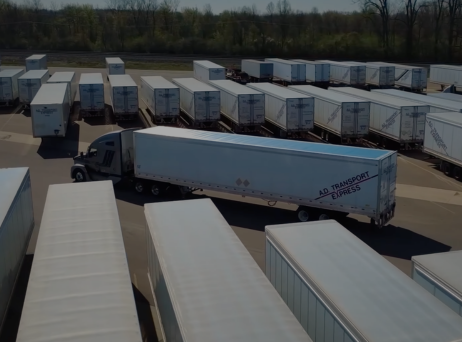
Based in Canton, Michigan, A.D. Transport Express has been moving freight for 41 years. With more than 500 trucks and 1,700 trailers, the company has always treated asset visibility as an operational discipline.

When it came time to replace their previous telematics provider, they did not just switch platforms. They rethought the install entirely. With 1,050 new trailers already on order, A.D. Transport worked with Phillips Connect to have StealthNet units installed on the factory floor before a single trailer ever shipped. What followed was a system with no setup lag, no retrofit window, and a failure rate their previous provider never came close to matching.

A.D. Transport Express Adds Phillips Connect to 1,050 OEM New Trailer Builds, Dispatching Straight from the Factory Floor 

Maximum uptime, zero maintenance: StealthNet delivers from the factory floor forward 

IRVINE, California – July 9, 2026 – A.D. Transport Express, a 41-year-old full truckload carrier serving leading U.S. automotive manufacturers, has deployed Phillips Connect’s StealthNet trailer intelligence solution across its entire trailer fleet including 1,050 OEM new builds. By installing directly at the factory, A.D. Transport was able to dispatch each trailer the moment they left the factory, maximizing uptime and their return on investment. The company has experienced zero platform failures since deployment. 

“We were very excited with Phillips Connect’s Connect1 platform, because it’s had 100 percent uptime compared with our previous system,” said Ed, the company’s Director of Operations.  

A.D. Transport, based in Canton, Michigan, operates more than 500 trucks and 1,700 trailers across a nearly 100-acre facility, running freight around the clock for customers that include global freight carriers and retailers in addition to the automotive sector. Approximately 75% of its business runs on a drop-and-hook model, making trailer availability and dispatch speed critical to daily operations. 

Rather than schedule StealthNet installations after delivery, trailer by trailer, A.D. Transport worked with Phillips Connect to spec the StealthNet units into new builds at the factory. The result: every trailer left the factory already live, already visible, already earning. 

“It was just a great plan to have them put into the trailers as they were being manufactured,” said Matt, A.D. Transport Express’s co-founder and vice president. “We get to see the trailer coming from the factory to the point of our pickup, and then we can utilize the equipment right from there without having to bring it to the yard.” 

Ed put the operational impact plainly: “When we’re in the Midwest, we want to be able to dispatch the trailer to earn out of the gate.” 

In addition to its StealthNet units, A.D. Transport has deployed Connect1, Phillips Connect’s software platform, alongside the TechAssist app for its maintenance team. Chris, the shop manager and a 20-year veteran of the company, says the StealthNet units have required no maintenance since installation. 

“Because of the stability of the StealthNets, there is no maintenance to them that we’ve seen,” Chris said. 

The company is now working with Phillips Connect to extend fleet visibility directly to drivers via the DriverAssist app, giving them real-time trailer data on tablets and phones. For a carrier managing large drop lots where trailers can be buried or located at off-site customer locations, the capability is expected to reduce search time and increase daily earnings per driver. 

“Their time is so valuable,” said operations supervisor, Tom. “We really want to do everything in our power to let them maximize their time and maximize their earnings.” 

Implementation of GPS-Enabled Chassis Management at South Carolina Ports

How South Carolina Ports Uses Phillips Connect to Modernize Chassis Management Through GPS Visibility

Ports worldwide have traditionally operated without dedicated chassis management or GPS-based asset tracking, relying instead on manual processes that grow harder to sustain as volume increases. South Carolina Ports recognized the inefficiencies built into that approach and in 2022 made a strategic decision to launch its own chassis management program. A dedicated team of 12 staff took on responsibility for roughly 10,000 chassis, with a clear mandate: bring visibility to equipment that had effectively been operating blind once it left the terminal.

The challenge was not unique to SCPA, but it was acute at their scale. Once chassis left port facilities, their locations became difficult to track, and units frequently migrated into other markets, driving up retrieval costs and disrupting operations. Intermodal Equipment Providers, who manage trailers across the country, struggled with the same limitation, hampered by technology that could not deliver accurate, real-time tracking. Inaccurate or delayed data compounded the problem, making it difficult for SCPA to verify chassis locations with any confidence. Solving this meant equipping the fleet with GPS and telematics that could finally close the visibility gap.

How Nussbaum Transportation Added 50% More Useful Life to Its Trailer Fleets

Maintenance, dispatch, safety, and sales: one carrier’s seven-year journey to running a
smart trailer platform across the whole organization.

IRVINE, Calif. — May 6, 2026 — Seven years into running Phillips Connect’s smart trailer
technology platform, Nussbaum Transportation has made trailer intelligence a mission-critical
component of nearly every part of its operation: maintenance, dispatch,
operations, safety, their sales team, and the driver experience.

Phillips Connect recently debuted Nussbaum’s success story documenting how the
Hudson, Illinois-based truckload carrier reached this milestone and what that level of
adoption has produced.

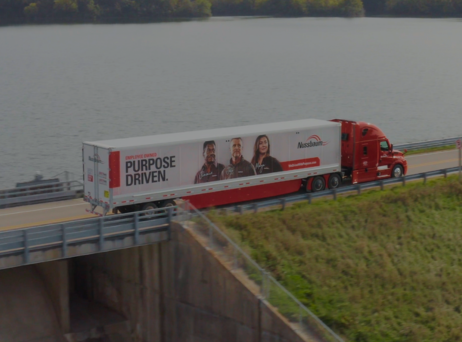
Nussbaum operates approximately 600 tractors and 1,700 trailers across 48 states. Over
the course of the partnership, the carrier has extended the useful life of their trailers from
10 years to 15, a decision informed by continuous trailer health data rather than fixed trade
cycles. Their CSA score now leads their benchmark group, and roadside costs have
trended down as preventable issues are caught before a driver ever hooks up to the
equipment.

The success story also details how adoption spread beyond the maintenance shop.
Nussbaum’s operations team uses the platform to manage all 1,700 trailers in real time,
with visibility into what trailers are loaded, empty, how much space is available, and where
each one sits, reducing the phone calls and guesswork that slow dispatch. Their sales
team uses the Phillips Connect platform to give customers direct visibility into their own
trailer pools, turning it into a customer service tool.

“Prior to Phillips Connect, we wouldn’t have as much trust in the equipment because we
didn’t have eyes on them. With Phillips Connect, we can have more trust knowing that we
can reliably push the life of these trailers out to 15 years,” said James Grier, Director of
Fleet Service at Nussbaum Transportation.

“It all boils down to efficiency. How efficient are we being with utilizing that asset, whether
it’s operations, whether it’s maintenance, and then when it comes to the customer, how
can we put it in front of them. All of those things play into how we want to really utilize
trailer intelligence,” said Doug Bradle, Chief Operating Officer at Nussbaum
Transportation.

“Nussbaum is the kind of fleet our platform was built for. When a customer trusts the data
enough to extend their trailer life, support their compliance programs, and put that
intelligence in front of every team in the organization, the outcomes speak for themselves,”
said Rob Phillips, Founder and CEO of Phillips Connect. “None of that happens without a
real relationship behind it.”

More information on the Nussbaum Transportation can be found here.

About Phillips Connect
Phillips Connect is a leader in smart trailer technology, helping the world’s largest fleets unlock the
full value of their trailers through advanced intelligence, monitoring, and real-time visibility. The
Phillips Connect platform brings together data from sensors, cameras, and an expanding
ecosystem of integrated technologies to deliver actionable insights across trailer operations. From
the yard to the back office, teams gain a clearer view into trailer health, cargo conditions, location,
and activity, supported by built-in cargo monitoring designed to help protect freight and reduce
risk. By transforming trailer data into meaningful operational insight, Phillips Connect enables safer
operations, more efficient workflows, and more predictable performance. Headquartered in Irvine,
California, Phillips Connect provides intelligent trailer solutions for modern transportation. For
more information, visit www.phillips-connect.com.

Building Confidence in Every Mile with Nussbaum Transportation

How Nussbaum Transportation Uses Phillips Connect to Extend Trailer Life and Drive Fleet-Wide Efficiency 

Founded in 1945 and headquartered in Hudson, Illinois, Nussbaum Transportation has built nearly 80 years of growth on a simple philosophy passed down from its founder: treat your people well, and the rest will take care of itself. Today, that philosophy shapes not just how Nussbaum manages its drivers, but how it manages its equipment. Operating nearly 600 trucks, 1,700 trailers, and roughly 540 drivers across all 48 contiguous states, Nussbaum needed more than good intentions to keep that scale running reliably. They needed visibility.

The challenge is not unique to Nussbaum, but it is acute at their size. Tractors generate a steady stream of driver input. Drivers live in them, report problems, and take ownership of their condition. Trailers are different. On any given day, two, three, four, or five different drivers might touch a single unit, with no single person accountable for its health. As Nussbaum grew from 200 to nearly 600 trucks, tracking 1,700 trailers spread across 48 states manually became unsustainable. The company also faced pressure common across the industry: new trailer purchases had slowed, making it more critical than ever to extend the useful life of the assets already in the fleet. Nussbaum made a strategic decision to push its trailer replacement cycle from 10 years to 15. That kind of confidence requires eyes on the equipment.

What challenges did Nussbaum Transportation face before partnering with Phillips Connect?

Nussbaum struggled with visibility across a fast-growing trailer fleet. With 1,700 trailers spread across 48 states and multiple drivers touching each unit, there was no single person accountable for trailer health. Manual tracking became unsustainable, and the company needed a way to extend trailer life without sacrificing confidence in the equipment.

How does Phillips Connect help Nussbaum prevent roadside failures?

Every Nussbaum trailer runs TPMS, ABS fault monitoring, light-out detection, and wheel-end temperature monitoring through Phillips Connect. Critical alerts go directly to the roadside team around the clock, allowing them to dispatch vendors before drivers are even aware of a problem.

How has Phillips Connect impacted Nussbaum’s CSA score?

Since deploying Phillips Connect, Nussbaum has seen a significant reduction in roadside events and costs. Their CSA score has improved to the point where Nussbaum now leads its benchmark group, an outcome the team attributes largely to real-time visibility into trailer health.

How did Phillips Connect help Nussbaum extend its trailer replacement cycle?

With full visibility into the health of every trailer in the fleet, Nussbaum moved from reactive maintenance to data-driven, condition-based PM. That confidence supported a strategic decision to extend the trailer trade cycle from 10 years to 15.

How does Nussbaum use CargoVision for cargo claims and freight security?

CargoVision documents the condition of loads at pickup and delivery, creating a timestamped record that protects Nussbaum in cargo claim disputes. Combined with door sensors and geofencing, the platform provides a chain of custody that deters theft and resolves shipper disputes with documented evidence.

How does TrailerID benefit Nussbaum’s drivers and operations?

When a driver connects to a trailer, TrailerID logs the hookup automatically and flows straight into Geotab for hours-of-service compliance. This eliminates manual entry, reduces errors, and removes disputes over which driver had which trailer. This is a significant time saver across a fleet of 600 drivers.

How does Phillips Connect support Nussbaum’s customers?

Account managers use Phillips Connect dashboards to give customers real-time visibility into their trailer pools: what is loaded, what is empty, and what is DOT-healthy. Customers can set their own min/max alerts without needing to call, improving planning and reducing friction.

Your TMS Knows Your Trucks. Now It Knows Your Trailers. 

For years, the trailer has been the blind spot of fleet technology. Trucks have been connected, tracked, and optimized. Drivers have been monitored and dispatched with precision. But the trailer, the asset carrying the freight, the one that determines whether a load moves profitably, has largely been invisible to the systems that run fleet operations. 

That changes with Phillips Connect’s new integration with McLeod Software. 

The Gap That’s Been Costing Fleets 

Ask any fleet planner how they decide which trailer to assign to a load, and you’ll often hear the same answer: they check what they can find, make a few phone calls, and hope for the best. That’s not a technology problem. It’s a data problem. The information needed to make a smart decision — where is the trailer, how much space is left, is it mechanically ready to roll — has simply not been available inside the systems dispatchers and planners actually use. 

That gap shows up in empty miles, underutilized capacity, and loads that sit longer than they should. It shows up in the time planners spend chasing information instead of moving freight. And it shows up in the customer experience when a committed load can’t be confirmed because no one really knows what’s available. 

Trailer Intelligence Where It Belongs 

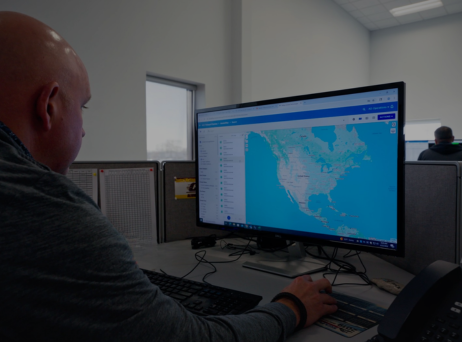
The Phillips Connect integration with McLeod Software puts smart trailer data directly inside the McLeod TMS – no separate app, no manual data pulls, no switching between platforms. Fleet planners and dispatchers gain real-time visibility into trailer location, tire health, brake and lights status, and, critically, what’s actually inside the trailer and how much capacity remains. 

That last capability, powered by Phillips Connect CargoVision, is where trailer intelligence takes a meaningful step forward. CargoVision uses an AI-powered camera to show exactly what’s loaded in a trailer and delivers volumetric measurements that support accurate load planning. For partial shipments, multi-stop routes, or any operation where load matching matters, this level of detail transforms the trailer from an unknown quantity into a capacity-aware asset. 

MNS1, the first fleet to complete the integration, saw the difference immediately. “Our planners and dispatchers can see inside every trailer, understand how much space is left and decide quickly which trailers are ready to deploy, and which need to be repositioned,” said Mike Narkys, President of MNS1. “The Phillips Connect integration with McLeod helps us turn loads faster, reduce empty moves and put our trailers to work where they make the most impact for our customers and our drivers.” 

More Than Location — A Full Trailer Picture 

What distinguishes this integration is the breadth of intelligence it delivers. Many connected vehicle solutions stop at location. Phillips Connect surfaces the full health and status picture of every trailer: tire condition, brake performance, lights — the mechanical readiness indicators that determine whether a trailer is actually ready to move. Combine that with cargo intelligence and volumetric load data, and fleets gain something they haven’t had before: a complete, real-time view of every trailer’s operational status, all inside the platform they already run their business on. 

“With the Phillips Connect integration, mutual customers gain cargo visibility and real-time trailer location inside McLeod,” said Ahmed Ebrahim, Senior Vice President of Strategic Partnerships and Integrations at McLeod Software. “This provides our customers with stronger insight into their networks and helps them plan more effectively across their fleet.” 

The First of Many 

This integration is the opening move in a broader Phillips Connect platform strategy. The goal is to meet fleets where they already work — not ask them to adopt another standalone system, but to bring smart trailer intelligence into the TMS, fleet management, and operational platforms they depend on every day. 

“Trailers become active contributors to fleet strategy when data such as tire, lights and brake health, cargo intelligence, and location are accessible in the platforms they already rely on,” said Todd Hodges, Director of Product Management for Phillips Connect. “This integration is the first of many that will help fleets bring their trailer intelligence forward, no matter what software platforms they use to run their business.” 

For fleets running McLeod across North America, the integration is available now. For the broader industry, it represents a clear direction: trailer data belongs in the operational core of fleet management, not siloed in a separate tool. 

The trailer has always been essential. Now it’s finally visible. 

Phillips Connect helps fleets maximize their ROI on every trailer, every load, and every mile. Learn more at phillipsconnect.com. 

Phillips Connect Expands Trailer Intelligence Across Roadside, Brake and Liftgate Systems 

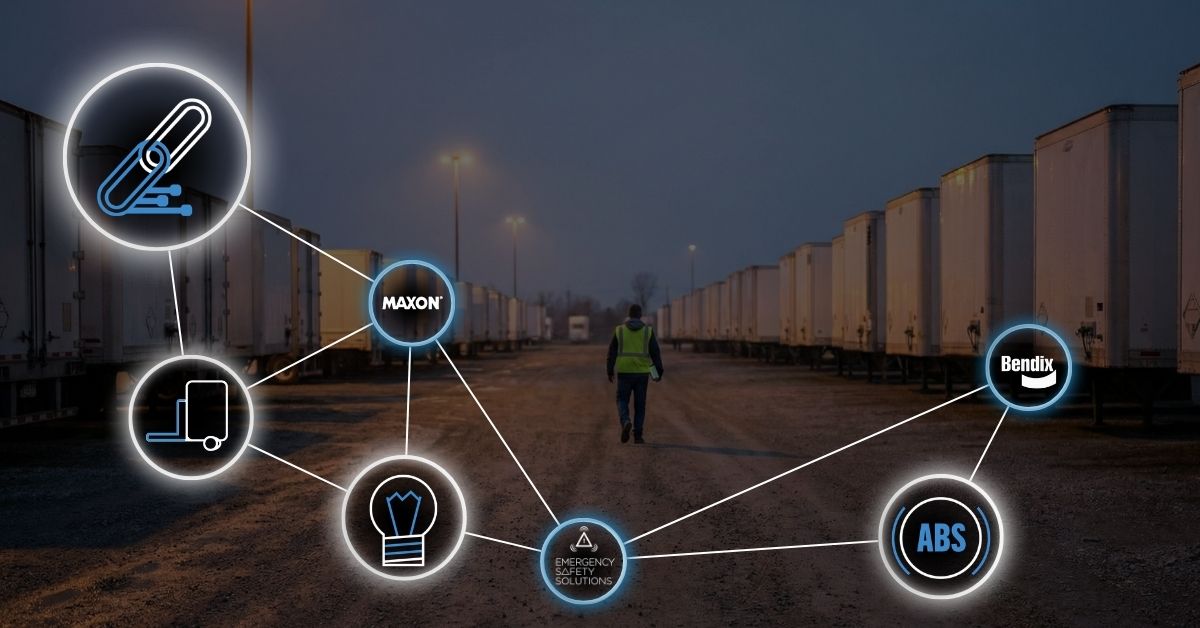
Enhanced solutions deliver deeper operational insight through collaborations with Emergency Safety Solutions (ESS), Bendix and Maxon 

NASHVILLE, Tenn. – March 15, 2026 – Phillips Connect today announced new enhancements across three key trailer system categories that expand how fleets manage roadside safety, brake performance and liftgate operations. Introduced at the Technology & Maintenance Council (TMC) Annual Meeting & Transportation Technology Exhibition, the updates strengthen how fleets capture operational intelligence from critical trailer systems and distribute those insights across maintenance, operations and safety teams. 

“Every system on the trailer generates insights that can help fleets operate more safely and efficiently,” said Mark Wallin, general manager and senior vice president of product at Phillips Connect. “Our platform is designed to capture those signals and turn them into actionable insights. By working closely with leading equipment providers, we can also deliver deeper intelligence from systems fleets already rely on across their trailers.” 

Phillips Connect Roadside Safety Intelligence 

Phillips Connect introduced new Roadside safety solutions designed to improve visibility and awareness during roadside events. 

Through a partnership with Emergency Safety Solutions (ESS), the Phillips Connect platform can trigger ESS’s H.E.L.P. DeliverSAFE intelligent roadside hazard technology when a trailer is stopped on the shoulder. When a driver activates the trailer’s hazard lights, the system automatically initiates H.E.L.P. Lighting Alerts, flashing the trailer’s lights in a distinctive high-visibility pattern designed to attract more attention than standard hazard lights. The system also sends real-time shouldered vehicle alerts to approaching motorists through navigation apps and in-dash systems, helping drivers identify roadside hazards earlier and move over more safely. 

Roadside safety intelligence builds on Phillips Connect’s existing light circuit monitoring technology, extending its functionality to improve roadside awareness and help protect drivers, equipment and freight during roadside events. 

Phillips Connect Brake System Intelligence 

Phillips Connect also added system enhancements to its existing brake solutions that provide greater visibility into trailer brake performance and status. 

When fleets operate trailers equipped with Bendix TABS Advanced brake system electronic control units (ECUs), Phillips Connect can access diagnostic trouble code (DTC) fault reporting and standard formatted data messages. This information includes brake wear, trouble codes and other system data that may help maintenance teams detect developing issues and prioritize service before they escalate. 

Phillips Connect can provide fleets access to insights from this data that strengthen cultures of safety by enabling fleets to respond more quickly to events such as roll stability activation or braking faults that may require attention. 

Phillips Connect Liftgate Intelligence 

Phillips Connect also enhanced its liftgate solutions to provide fleets with improved liftgate performance and usage data. 

Liftgates are essential to many delivery operations, particularly on routes with frequent stops or locations without loading docks. When fleets operate Maxon liftgates equipped with MAX LINK technology, Phillips Connect can provide fleets with deeper insight into liftgate activity, system health and performance through its partnership with Maxon. 

This information helps fleets identify potential liftgate issues earlier and avoid delivery disruptions that can occur when liftgate batteries or hydraulic systems stop functioning properly. 

Expanding the Connected Trailer Ecosystem 

These enhancements reflect Phillips Connect’s broader strategy to capture operational intelligence from the systems already installed across the trailer. 

By supporting deeper data visibility from leading equipment and solutions providers, Phillips Connect enables fleets to monitor critical trailer systems while continuing to operate the equipment and technologies they already rely on. 

Phillips Connect will showcase these technologies at TMC in Nashville, March 16–18. Show attendees can learn more about the company’s smart trailer platform and see the latest innovations in connected trailer intelligence at the Phillips Connect booth 2029. 

About Phillips Connect 

Phillips Connect develops smart trailer technology that helps fleets capture and apply intelligence from across the trailer. Its platform brings together sensors, cameras and integrated systems to provide visibility into trailer operations, equipment health and cargo activity. By turning trailer intelligence into operational insight, Phillips Connect helps fleets improve safety, increase uptime and operate more efficiently. 

Founded in 2017 and headquartered in Irvine, California, Phillips Connect develops technology that helps fleets monitor trailer systems, identify issues earlier and make better decisions by making trailer intelligence accessible across the fleet. Learn more at www.phillips-connect.com. 

Phillips Connect Introduces Platform Enhancements for Connected Trailers 

New JumpStart offering, CargoVision People Detection and Driver Behavior Insights expand trailer intelligence for fleets.

NASHVILLE, Tenn. – March 15, 2026 – Phillips Connect today announced new platform enhancements designed to expand how fleets capture and use trailer intelligence across their operations. Introduced at the Technology & Maintenance Council (TMC) Annual Meeting & Transportation Technology Exhibition, the updates improve visibility into trailer activity, cargo operations and trailer performance while making it easy for fleets to benefit from smart trailer intelligence even if they rely on another provider for GPS location tracking. 

“Track-and-trace GPS units have long been the baseline for trailer visibility, but fleets need more than location to make informed decisions that affect operations, safety, dispatch, compliance and maintenance,” said Mark Wallin, general manager and senior vice president of product at Phillips Connect. “The next generation of connected trailer technology is already here, enabling fleets to capture intelligence from across the trailer and supply those insights to every role in the fleet.” 

JumpStart Expands Trailer Intelligence Beyond Location 

Phillips Connect announced JumpStart, a new offering designed to help fleets quickly begin capturing smart trailer insights beyond basic location tracking.  

Track-and-trace telematics providers deliver simple trailer GPS location but typically cannot capture operational intelligence from critical trailer systems. Without insight into how equipment is being used and performing, fleets have limited information to support operational, maintenance and safety decisions.  

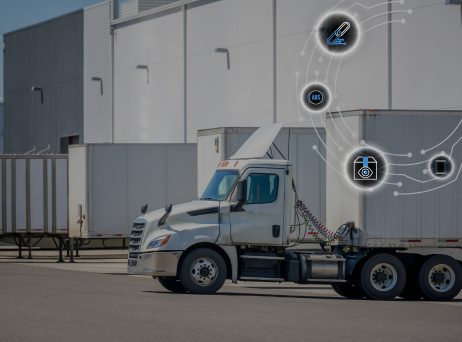
Even if fleets are capturing location data from another provider, JumpStart provides easy access to smart trailer insights through six entry points: automated TrailerID, cargo intelligence, brake systems, tire health, liftgate performance and temperature monitoring. Fleets can start with any of these systems and expand over time as they add more smart trailer insights.  

Phillips Connect CargoVision Adds People Detection Inside the Trailer 

Phillips Connect introduced People Detection, a new enhancement to its CargoVision platform that identifies when individuals enter or exit the trailer cargo area. The enhancement gives fleets greater awareness of activity inside the trailer during loading, unloading and other operations. CargoVision with People Detection also helps fleets detect unauthorized access, identify potential cargo theft and safety risks, and better understand how trailers are being used throughout the day. 

Driver Behavior Insights Provide Visibility into How Trailers Are Operated 

Phillips Connect also added Driver Behavior Insights to its platform, helping fleets understand how their trailers are being operated on the road. Using smart sensor data from the trailer, the Phillips Connect platform detects events such as harsh braking, aggressive acceleration and sharp cornering. These insights provide visibility into driver behavior even when trailers are being pulled by third-party tractors.  

This visibility is particularly valuable for fleets that rely on leased equipment, independent carriers or drop-and-hook operations, where trailer owners may not have direct access to tractor telematics. By identifying unsafe operating patterns earlier, fleets can better protect cargo, equipment and their brand on the road. 

Building the Next Generation of Trailer Intelligence 

These innovations reflect Phillips Connect’s broader strategy to capture operational insights from across the trailer and make them easier for fleets to use in their daily operations. 

By combining sensor data, visual intelligence and behavioral insights within a single platform, fleets can move beyond simple location tracking to gain a deeper understanding of how trailers are being used, maintained and operated across their networks. 

Phillips Connect will showcase these technologies at TMC in Nashville, March 16–18. Show attendees can learn more about the company’s smart trailer platform and see the latest innovations in connected trailer intelligence at the Phillips Connect booth 2029. 

About Phillips Connect 

Phillips Connect develops smart trailer technology that helps fleets capture and apply intelligence from across the trailer. Its platform brings together sensors, cameras and integrated systems to provide visibility into trailer operations, equipment health and cargo activity. By turning trailer intelligence into operational insight, Phillips Connect helps fleets improve safety, increase uptime and operate more efficiently. 

Founded in 2017 and headquartered in Irvine, California, Phillips Connect develops technology that helps fleets monitor trailer systems, identify issues earlier and make better decisions by making trailer intelligence accessible across the fleet. Learn more at www.phillips-connect.com. 

One Less Thing for Drivers to Worry About 

Spend time around professional drivers, and you quickly realize how much they manage in a single shift. Traffic, tight delivery windows, inspections, yard congestion, and changing instructions. The job requires constant attention. Yet in the middle of all that, drivers are often asked to complete one more small but important task: select and confirm the trailer they’re pulling before they leave. 

On paper, that step sounds simple. In real life, it happens in busy yards, under time pressure, sometimes at the end of a long day. It’s one more screen, one more confirmation, one more opportunity for something to be entered incorrectly. And when it is, the consequences rarely stay in the cab. 

If the wrong trailer is associated with a trip, that mismatch can affect Hours-of-Service logs, trailer inspection records, dispatch visibility, load security, and even the timing of billing. A small moment at hookup can ripple across compliance, planning, operations, and finance. 

Phillips Connect TrailerID was designed to remove that friction. Instead of relying on manual selection, TrailerID automatically identifies the connected trailer at the moment it is physically hooked. Drivers do not have to choose it. They do not have to confirm it. The system reflects what actually happened. 

That change may feel minor in the cab, but it has a meaningful impact across the fleet. When trailer identification happens automatically, compliance records stay aligned with the equipment being pulled. Dispatch and planning teams can see which trailer actually left the yard. Security teams have clearer insight into when and where trailers were connected and dropped. Billing can begin based on verified events rather than waiting for follow-up. 

Under the hood, TrailerID relies on a tightly integrated hardware and software platform that detects the physical tractor-trailer connection, rather than estimating movement based on proximity alone. Drivers experience the benefit automatically through DriverAssist or integrated in-cab platforms like Geotab and Platform Science, while operations teams see the same confirmed events in Connect1. Everyone works from the same record of what actually happened. 

For drivers, the benefit is straightforward: one less manual step in a job that already demands focus. For fleets, it means fewer corrections, fewer assumptions, and a clearer picture of how trailers are moving through the network. 

Sometimes the most meaningful improvements are not flashy features. They are the quiet changes that remove friction, simplify the day, and make the rest of the operation run a little more smoothly.