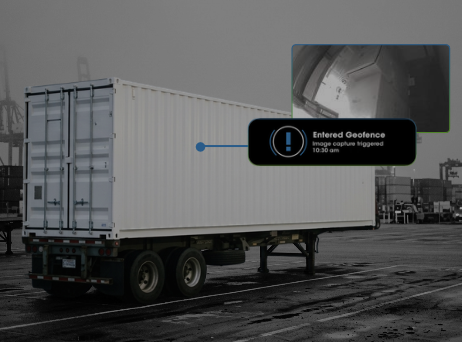
Phillips Connect Launches ContainerVision, Built to Catch Cargo Thieves in the Act 

A tamper-resistant, solar-powered cargo camera lets shippers and carriers see what is happening inside shipping containers  

LONG BEACH, Calif. – Sept. 14, 2026 – Phillips Connect has launched ContainerVision for the intermodal shipping market, giving shippers and carriers a near-real-time view inside shipping containers to catch cargo theft, confirm what is loaded and see what happens from the moment the doors open through delivery. The launch coincides with the Intermodal Association of North America (IANA) Expo taking place this week in Long Beach, Calif.  

ContainerVision is built on Phillips Connect’s CargoVision platform and engineered specifically for shipping containers. It captures a rapid burst of images whenever a container’s doors open, so if someone is moving cargo in or out, the camera catches the sequence as it unfolds rather than after the fact. It also identifies whether a person is present, what space remains inside the container, and whether there is equipment or dunnage inside.  

“Shipping containers move through places like ports, rail yards and distribution centers before they reach their destinations, and now customers can see what is happening inside them,” said Cliff Creech, senior vice president of operations at Phillips Connect. “ContainerVision gives customers eyes inside the container at the moments that matter, especially when the doors are opened unexpectedly.” 

ContainerVision is a solar-powered solution built to survive the container environment. It sits behind a reinforced metal shield, securely fastened to the container, and mounted out of reach. This helps protect the camera from rough handling and makes it difficult to remove or disable. Beyond cargo security, ContainerVision provides precise measurements of floor space and volumetric utilization, along with dunnage detection, eliminating the need to physically check each container before deciding where it can be used next.  

About Phillips Connect 

Phillips Connect is a leader in smart trailer technology, giving fleets greater visibility into the location, health, utilization and cargo conditions of their trailers. The company’s Connect1 platform brings together data from sensors, cameras and integrated technologies to help fleets protect freight, reduce downtime and make better operational decisions. Phillips Connect technology is used by some of the world’s largest fleets to understand what is happening across their trailer operations and act on issues sooner. Headquartered in Irvine, California, Phillips Connect develops intelligent trailer solutions for the transportation industry.

Built In, Not Bolted On with A.D. Transport Express

How A.D. Transport Express put visibility inside 1,050 trailers before they left the factory and eliminated a daily maintenance burden in the process. 

Based in Canton, Michigan, A.D. Transport Express has been moving freight for 41 years. With more than 500 trucks and 1,700 trailers, the company has always treated asset visibility as an operational discipline.

When it came time to replace their previous telematics provider, they did not just switch platforms. They rethought the install entirely. With 1,050 new trailers already on order, A.D. Transport worked with Phillips Connect to have StealthNet units installed on the factory floor before a single trailer ever shipped. What followed was a system with no setup lag, no retrofit window, and a failure rate their previous provider never came close to matching.

Implementation of GPS-Enabled Chassis Management at South Carolina Ports

How South Carolina Ports Uses Phillips Connect to Modernize Chassis Management Through GPS Visibility

Ports worldwide have traditionally operated without dedicated chassis management or GPS-based asset tracking, relying instead on manual processes that grow harder to sustain as volume increases. South Carolina Ports recognized the inefficiencies built into that approach and in 2022 made a strategic decision to launch its own chassis management program. A dedicated team of 12 staff took on responsibility for roughly 10,000 chassis, with a clear mandate: bring visibility to equipment that had effectively been operating blind once it left the terminal.

The challenge was not unique to SCPA, but it was acute at their scale. Once chassis left port facilities, their locations became difficult to track, and units frequently migrated into other markets, driving up retrieval costs and disrupting operations. Intermodal Equipment Providers, who manage trailers across the country, struggled with the same limitation, hampered by technology that could not deliver accurate, real-time tracking. Inaccurate or delayed data compounded the problem, making it difficult for SCPA to verify chassis locations with any confidence. Solving this meant equipping the fleet with GPS and telematics that could finally close the visibility gap.

5 Teams in a Fleet that Pay for One Trailer Tire Failure

I’ve spent enough years around fleets to know the line item for tires doesn’t tell the whole story. When a trailer tire fails on the road, maintenance writes the check, but that’s only one of the budgets it actually hits.

Here are five places one failure shows up:

1. Dispatch loses the window.

A roadside breakdown takes a trailer out of service at exactly the moment somebody is counting on it being there. If it’s a for-hire load, there’s a customer with an SLA on the other end. If it’s a private fleet, it’s a store, a depot, a plant, or a retail partner waiting on product. Dispatch handles the scramble. Somebody reroutes a backup, finds a substitute driver, or logs the delivery late. The cost shows up as lost capacity for the day and a relationship that gets a little harder to keep every time it happens.

2. The driver’s clock keeps running.

A driver waiting on the shoulder is on the hours-of-service clock, and any pay tied to miles or delivery stops at the same time. Every operations leader is already watching retention numbers. Stranding a driver because of a trailer tire isn’t the kind of story that helps those numbers.

3. Safety and risk inherit the paperwork.

Safety leaders own the incident review. Risk managers own whatever legal exposure follows. A tire incident backed by real trailer visibility is among the most defensible a fleet can face. One without it is among the hardest.

4. The brand pays in ways no one invoices.

When a casing comes apart at speed, it leaves debris in the lane. The fleet name on the side of the trailer is the one drivers behind it remember. It’s also the one that ends up in the complaint if a tire incident turns into a claim. A reputation takes years to build. A single roadside video can put a real dent in it overnight, and it doesn’t bounce back on the trailer’s schedule.

5. The tire program pays in wear.

A tire that runs underinflated burns extra fuel and wears faster. A casing destroyed running flat can’t be retreaded, which means it’s a full replacement instead of a second life. Knowing which trailers, which positions, and which routes are eating tires fastest is how a tire program buys fewer of them in a year.

Here’s where I land: maintenance has been carrying the tire conversation by itself for too long. The budget can stay in maintenance, but the conversation can’t. Real-time trailer intelligence on pressure, temperature, and wheel-end behavior puts the same problem in front of operations, dispatch, safety, risk, the driver, and the C-suite at the same time, with the same numbers. The same trailer data extends across cargo monitoring, brakes, doors, and liftgates, giving every team the operational insights they need to act on what they’re seeing, and one tire failure stops being everyone’s problem.

How much does a trailer tire failure cost a fleet?

A trailer tire failure costs far more than the tire and the road call. The full bill includes the missed delivery window, dispatch rerouting and substitute equipment, driver hours-of-service time without active pay, safety and risk paperwork, brand exposure from any roadside incident, and accelerated wear on the rest of the tire program.

Does ATIS prevent trailer tire failures?

Automatic tire inflation systems (ATIS) keep up with normal pressure loss, but they can fall behind a leak that is larger than the system can fight. When that happens, the tire runs underinflated for long stretches and the only signal is that ATIS cycles more often than usual. ATIS reduces failures. It does not eliminate them.

What is the difference between ATIS and TPMS for trailers?

ATIS (automatic tire inflation systems) adds air to keep tires at a set pressure. TPMS (tire pressure monitoring systems) measures and reports actual pressure and temperature on each tire in real time. ATIS reacts. TPMS reports. A fleet running both can see when ATIS is losing the race to a leak it can’t keep up with.

Why isn’t a pre-trip inspection enough to catch trailer tire problems?

A pre-trip is a visual inspection, and visual inspection has limits. Drivers don’t typically take a pressure reading on every walk-around. A tire 20 or 30 PSI under spec doesn’t always look different from one at spec. Slow leaks, early wear patterns, and casing damage from repeated underinflation are not visible from outside the tire.

How can fleets reduce trailer tire failures?

Real-time visibility is the most effective lever. Tire pressure monitoring, temperature data, and wheel-end behavior make it possible to spot a slow leak, an underinflation pattern, or a wheel position that keeps showing up in the failure log before any of it ends in a roadside incident. Visibility turns an inevitable failure into a manageable one.

Who in a fleet pays the cost of a trailer tire failure?

Real-time visibility is the most effective lever. Tire pressure monitoring, temperature data, and wheel-end behavior make it possible to spot a slow leak, an underinflation pattern, or a wheel position that keeps showing up in the failure log before any of it ends in a roadside incident. Visibility turns an inevitable failure into a manageable one.

Real-Time Cargo Intelligence is Changing the Economics of Freight

For years, fleets have operated with limited visibility into what was actually happening inside the trailer. They could track location, monitor door events, and gather information from the tractor, but the trailer itself often remained one of the largest blind spots in fleet operations until after a problem had already occurred.

That is beginning to change as internal camera systems evolve from passive recording devices into intelligent operational tools that provide real-time trailer visibility and deeper operational insights across the freight network.

The most important shift is not simply that fleets now have cameras inside the trailer. It is that modern AI-powered cargo monitoring systems can interpret activity in real time and help operations teams understand the difference between routine movement and events that require attention. Instead of relying on someone to manually review footage after an incident, intelligent systems can identify human presence, recognize unauthorized access, detect dangerous cargo shifts, and alert teams while freight is still moving through the supply chain.

That changes the role of the trailer entirely.

A trailer parked at a customer facility with workers actively loading freight is normal. The same activity occurring unexpectedly at a roadside stop or unsecured location immediately becomes a security concern that can be verified and escalated in real time. The result is faster response, better documentation, and a much narrower window for cargo theft or tampering to occur.

But the operational value extends well beyond security.

One of the most common frustrations in fleet operations is dispatching a driver to retrieve a trailer that is supposedly empty, only to discover leftover freight, pallets, or dunnage still inside. These dry runs create unnecessary fuel consumption, wasted driver hours, equipment delays, and avoidable operational friction. With improved trailer visibility and real-time cargo monitoring, operations teams can remotely verify trailer status before assigning equipment, helping fleets reduce wasted movement and improve trailer utilization.

The same intelligence creates stronger operational accountability during loading and unloading. Detention disputes continue to impact profitability across the industry because fleets often lack clear documentation showing exactly when loading activity started and stopped. Internal camera systems equipped with timestamped visual records provide objective proof that helps fleets resolve disputes faster and establish accountability with greater precision.

Trailer intelligence is also beginning to influence how fleets think about capacity management.

AI-driven image processing can now estimate volumetric fullness inside the trailer, giving dispatchers a more accurate understanding of available cargo space instead of relying on assumptions or manual driver updates. For LTL and pooled freight operations, those operational insights create opportunities to consolidate loads more efficiently, maximize revenue per mile, and reduce underutilized trailer space across the network.

There are also important safety and maintenance implications.

Internal cameras can identify improperly secured loads, cargo that has shifted dangerously during transit, or trailers that require cleaning before the next assignment. Yard managers can conduct virtual inspections remotely across large trailer pools in a fraction of the time required for traditional manual yard checks, improving consistency while reducing labor demands.

What is emerging is a broader shift in how fleets think about the trailer itself.

For decades, most transportation technology focused on the tractor while the trailer remained largely disconnected from day-to-day operational decision-making. But the trailer is where the freight lives, where loading and unloading occur, and where many of the operational risks and inefficiencies actually originate.

As fleets continue pushing for stronger efficiency, better asset utilization, improved cargo security, and more responsive operations, trailer intelligence will become increasingly central to how freight networks operate. The ability to combine trailer visibility, cargo monitoring, and real-time operational insights into a single connected system gives fleets a far more complete understanding of what is happening across their operations while freight is still in motion.

The trailer is no longer just carrying cargo. It is becoming one of the most important sources of intelligence in the modern supply chain.

►  Get in touch with Thomas

What is trailer intelligence in modern fleet operations?

Trailer intelligence refers to the ability to gather, interpret, and act on real-time data coming directly from the trailer. This includes cargo monitoring, trailer visibility, load status, door activity, tire health, cargo capacity, and operational conditions inside the trailer itself. Modern trailer intelligence platforms combine sensors, cameras, AI-driven analytics, and connected systems to help fleets improve security, efficiency, safety, and operational decision-making.

Why is trailer visibility becoming more important for fleets?

Trailer visibility gives fleets a clearer understanding of what is happening inside and around the trailer while freight is moving through the supply chain. Historically, fleets could track trailer location but had very little insight into cargo condition, unauthorized access, loading activity, or available capacity. Real-time trailer visibility helps fleets reduce theft, improve asset utilization, eliminate wasted driver trips, resolve detention disputes faster, and make more informed operational decisions.

How does cargo monitoring improve fleet operations?

Cargo monitoring allows fleets to verify cargo status, monitor trailer fullness, detect load shifts, and identify unauthorized access in real time. Instead of relying on manual checks or delayed reporting, operations teams can remotely confirm trailer conditions and respond quickly when problems occur. This improves cargo security, reduces operational delays, supports better load planning, and creates stronger documentation for claims and compliance purposes.

How do internal trailer cameras help prevent cargo theft?

AI-powered internal trailer cameras can automatically detect human presence, unauthorized entry, or suspicious activity inside a trailer. When integrated with trailer visibility systems and geofenced alerts, fleets can verify security breaches in real time and respond immediately instead of discovering theft after the cargo is already gone. This proactive approach significantly shortens response times and improves cargo protection.

What operational insights can fleets gain from intelligent trailers?

Intelligent trailers provide operational insights related to trailer utilization, cargo capacity, detention events, loading efficiency, asset readiness, safety conditions, and maintenance needs. Fleets can use this information to improve dispatch decisions, maximize revenue per mile, reduce empty miles, improve yard management, and identify operational inefficiencies before they impact service levels or profitability.

How does trailer intelligence support detention management?

Internal trailer cameras and connected monitoring systems provide timestamped visual records showing when loading and unloading activity begins and ends. These records help fleets validate detention claims, improve accountability with shippers and receivers, and reduce disputes related to loading delays.

Can trailer intelligence improve trailer utilization?

Yes. Trailer intelligence platforms can help fleets remotely verify whether trailers are empty, partially loaded, or ready for dispatch. AI-powered cargo monitoring can also estimate available trailer capacity, helping operations teams consolidate freight more effectively and reduce underutilized trailer space.

What is the future of trailer intelligence?

The industry is moving toward fully connected trailers that continuously generate operational insights in real time. As fleets invest in automation, predictive maintenance, cargo monitoring, and intelligent freight operations, the trailer is becoming an active participant in operational decision-making rather than simply an asset being pulled down the road.

Phillips Connect Names Mark Wallin President and General Manager

The leadership appointment comes as Phillips Connect advances the trailer’s role in connected and autonomous freight operations

IRVINE, Calif. — May 21, 2026 — Phillips Connect‘s smart trailer technology powers daily
trailer operations at several of North America’s top 10 enterprise trucking companies, with
a growing platform of solutions, sensors, and integrated systems that elevate the trailer to
a critical component of every modern fleet. Today, Phillips Connect named Mark Wallin,
the principal architect of its technical roadmap and customer strategy, as president and
general manager, as the company helps enterprise fleets lay the foundation for
autonomous freight.

Phillips Connect’s platform provides intelligence about cargo, brakes, tires, lights,
liftgates, trailer identification, location, and the patterns in how each trailer is being used.
The result is a current and accurate picture of every trailer a fleet operates, and a way to
operationalize what each trailer knows across the entire fleet.

]Over the past 18 months, Phillips Connect has expanded its platform of solutions and
worked to lower the barriers to adoption. Recent additions to the platform include
DriverAssist, which puts trailer health information in the driver’s hands during pre-trip
inspections and on the road, and TrailerID, which automatically confirms the correct trailer
is hooked at the moment of connection. Phillips Connect also launched CargoVision
Insights which gives fleets real-time cargo intelligence from inside the trailer, along with
new Roadside Safety solutions that help fleets protect drivers, cargo and nearby motorists
when trailers are stopped on the shoulder. Phillips Connect SolarNet 8000 series,
launched in late 2025, brings location, cargo intelligence and tire health (TPMS) into a
single solar-powered solution.

“Mark is the kind of leader you build a company with,” said Rob Phillips, founder and CEO
of Phillips Connect. “He has a rare gift for turning ambitious ideas into solutions our
customers benefit from in their day-to-day work, and for building a team of remarkable
people to work alongside him. We have real opportunity in front of us to define what smart
trailers become for this industry, and Mark is exactly the person to lead us into it.”
“Smart trailer technology isn’t a nice-to-have anymore. What’s a differentiator today
becomes a minimum requirement for how fleets operate tomorrow,” Wallin said. “Our job
is to keep solving the real problems our customers wake up to, whether that’s tires, safety,
cargo, or the shift toward autonomous freight, and to keep leading where this industry is
going. I’m grateful to Rob and the team for the confidence, and I’m looking forward to what
comes next.”

Wallin joined Phillips Connect in January 2024 as general manager and senior vice
president of product. He brings more than two decades of product leadership across the
connected fleet, IoT and enterprise SaaS markets, including senior product management
roles at Verizon Connect, Telogis and Kofax, and is a member of the Forbes Technology
Council. He holds a bachelor’s degree in computer science and electrical engineering from
Stanford University and is based in Irvine, California.

About Phillips Connect
Phillips Connect is a leader in smart trailer technology, helping the world’s largest fleets unlock the
full value of their trailers through advanced intelligence, monitoring, and real-time visibility. The
Phillips Connect platform brings together data from sensors, cameras, and an expanding
ecosystem of integrated technologies to deliver actionable insights across trailer operations. From
the yard to the back office, teams gain a clearer view into trailer health, cargo conditions, location,
and activity, supported by built-in cargo monitoring designed to help protect freight and reduce
risk. By transforming trailer data into meaningful operational insight, Phillips Connect enables safer
operations, more efficient workflows, and more predictable performance. Headquartered in Irvine,
California, Phillips Connect provides intelligent trailer solutions for modern transportation. For
more information, visit www.phillips-connect.com.

If You Wouldn’t Send It Out of the Shop, Why Send It Out of the Yard?

I’ve spent my career in connected commercial vehicle technology. Long enough to see what “almost there” looks like: providers who could demo a compelling vision but struggled to deliver at scale, with real fleets, in real operating conditions.

That experience made me selective, and it’s also what brought me to Phillips Connect.

From day one, the focus here has been a fully integrated smart trailer platform. Not a partial solution, not a pilot with a handful of customers, but a proven platform built on durable sensors and, more importantly, the software intelligence to turn what those sensors capture into insights fleets can act on. That combination forces you to solve the hard problems: sensor reliability, yes, but also what you do with the insight once you have it. Most fleets are surprised by what they didn’t know they didn’t know about their trailers.

The shift that’s coming is operational, not just technological.

When I talk to enterprise fleet managers, the vision lands immediately. Almost every conversation starts the same way: “If I could see the health of every trailer from my desk, I’d run my operation differently.”

And they mean it. The idea of a desktop yard check, assessing the lights, brakes, and tire health of every trailer before dispatch without sending someone into the yard with a clipboard, isn’t science fiction anymore. It’s quickly becoming the standard.

But getting there requires more than technology. It requires a change in how fleets think about maintenance itself.

Most enterprise fleets still operate on time-based PMs and a “fix it when it breaks” model. That’s not a criticism. It’s how the industry was built, and it worked well enough when visibility was limited. But the model is changing. Fleets are moving from reactive to proactive, and eventually to prescriptive: not just knowing there’s a problem, but knowing which problems to address first, in what order, and why. And those insights don’t live in a vacuum. When smart trailer software connects with a fleet’s existing maintenance systems, safety platforms, and dispatch tools, the whole operation starts speaking the same language.

What I hear from fleets, and where the real friction is.

The barriers aren’t usually about the technology. They’re cultural and operational.

There are decades of inertia around time-based maintenance schedules. There’s skepticism about introducing new systems into an already complex operation. And there’s a real, important conversation happening among safety-conscious fleets about what visibility and accountability actually mean in practice.

Here’s what the best operators have figured out: if you’re running an operation built around safety, proactive maintenance, and genuine regard for your drivers, the insights you’re generating support you. Fleets that are actively identifying and addressing issues before they become problems on the road are building a record of operational integrity. That’s a fundamentally different position than one that was watching the warning signs and choosing to look the other way.

The fleets making real progress aren’t trying to boil the ocean. They start with controlled environments, dedicated fleets, specific lanes, often specing smart trailers at the OEM level, during natural equipment turnover. They build processes around desktop fleet health checks and pre-load validation. They use early deployments to prove the operational and financial case.

And then something clicks.

The aha moment is when a fleet realizes this isn’t about tracking. It’s about changing how the entire operation runs: maintenance, dispatch, planning, safety, compliance. Insights surface that nobody was looking for: load patterns that accelerate tire wear, brake performance trends that show up weeks before a failure, lighting issues concentrated in specific trailer age ranges. Combine that with integrations pulling in context from in-cab systems, maintenance, and TMS platforms already in use, and you’re not just monitoring trailers anymore. You’re seeing your fleet in a way you never have before.

That translates into real operational change:

  • Preventing compromised trailers from ever reaching a dock door
  • Reducing CSA exposure before a truck hits the road
  • Eliminating wasted yard moves and augmenting manual checks
  • Creating a feedback loop between operations, maintenance, and safety
  • Sending automated, priority-ranked work orders directly to the maintenance system

Once that happens, the conversation shifts from “Do we need this?” to “How fast can we scale it?”

Why now is the inflection point.

Here’s what I think gets underappreciated in conversations about smart trailers: this isn’t just about efficiency. It’s about where the entire industry is going.

For some fleets, this is already about preparing for autonomous operations. If a truck is driving itself, the trailer behind it can’t be a question mark. Lights, brakes, tire health become continuously monitored, non-negotiable systems. Smart trailer technology won’t be optional in that world. It will be required infrastructure.

But even before autonomy fully arrives, expectations are shifting. More visibility. More accountability. Less tolerance for reactive operations. No fleet wants to be in a position where a preventable issue becomes a safety event, or a headline.

The inflection point is here. Fleets that start building these capabilities now, the processes, the insights, the integrations, are going to be the ones that separate themselves over the next three to five years.

Healthy trailers don’t happen by schedule. They happen by visibility, by proactive action, and by a commitment to knowing the answer before the trailer ever leaves the yard.


Michael Hoffman is a strategic sales leader at Phillips Connect, a connected trailer technology company focused on delivering the industry’s most comprehensive smart trailer platform.

What is a smart trailer?

A smart trailer is a commercial trailer equipped with sensors and software that continuously monitor its health and operational status, including lights, brakes, tires, and other critical systems. Unlike traditional trailers that rely on manual inspections and time-based maintenance schedules, smart trailers generate real-time insights that allow fleet operators to identify and address issues before they affect safety or operations. The value of a smart trailer platform isn’t just in the sensors themselves, but in the software that transforms what those sensors capture into actionable intelligence fleet teams can use every day.

How do smart trailers improve fleet maintenance operations?

Smart trailers shift fleet maintenance from a reactive model to a proactive and eventually prescriptive one. Instead of servicing trailers on a fixed schedule or waiting for something to fail, maintenance teams receive continuous insights about the actual condition of every trailer in the fleet. This allows them to prioritize work orders based on real need, address issues before they become failures, and reduce the time and cost associated with unnecessary or missed maintenance. When integrated with existing maintenance management systems, smart trailer platforms can automatically generate and stack-rank work orders, helping teams focus on what matters most.

What is a desktop fleet health yard check?

A desktop yard check is the ability for fleet managers and operations teams to assess the health status of every trailer in a yard, including lights, brakes, and tire condition, directly from a software interface without requiring a manual physical inspection. Rather than sending someone into the yard with a clipboard before each dispatch, a desktop yard check surfaces the same information digitally, flagging any trailers with outstanding issues before they’re assigned to a load. This capability is becoming a standard expectation for enterprise fleets that prioritize safety and operational efficiency.

How do smart trailers reduce CSA violations?

CSA (Compliance, Safety, Accountability) violations are often the result of trailers leaving the yard with undetected issues, lighting failures, brake deficiencies, or tire problems that a roadside inspection will catch. Smart trailer technology addresses this by surfacing those issues before dispatch, giving maintenance teams the opportunity to resolve them before a truck ever hits the road. Fleets using smart trailer platforms consistently report a reduction in out-of-service events and roadside violations because problems are identified and corrected at the yard level rather than discovered during a DOT inspection.

What kinds of insights can smart trailer sensors reveal that fleets weren’t previously aware of?

Beyond the expected brake, tire, and lighting alerts, smart trailer platforms surface patterns that manual inspection simply cannot. Load distribution trends that accelerate wear on specific trailer components. Brake performance degradation that shows up weeks before a failure event. Lighting issues concentrated in particular trailer age ranges or models. Tire pressure patterns tied to specific routes or seasons. These are the kinds of insights that change how a fleet thinks about procurement, routing, and preventive maintenance, not just how they manage the repair queue today.

How do smart trailer platforms integrate with other fleet systems?

A well-built smart trailer platform doesn’t operate in isolation. It connects with the tools fleet operations already rely on, including telematics providers, maintenance management systems, safety platforms, and dispatch software. These integrations allow trailer health insights to flow into the broader operational picture, so a maintenance director, safety manager, and dispatcher are all working from the same understanding of fleet readiness. The result is a connected operation where trailer health informs decisions across departments rather than sitting in a separate system no one checks consistently.

What are the biggest barriers to smart trailer adoption in enterprise fleets?

The most common barriers are cultural and operational rather than technological. Many enterprise fleets have decades of established processes built around time-based preventive maintenance and manual inspection routines. Introducing a new model requires buy-in across maintenance, safety, and operations teams. There’s also skepticism about the complexity of managing new systems at scale. The fleets that overcome these barriers typically start with a controlled deployment in a dedicated fleet or specific region, build internal processes around the new insights, and use early results to make the case for broader rollout.

What is the business case for smart trailer technology in enterprise fleets?

The business case operates on several levels. Operationally, smart trailers reduce unplanned downtime, eliminate wasted yard moves, and allow maintenance teams to focus their time on the work that actually needs doing. From a safety and compliance standpoint, they reduce CSA exposure and the risk of a preventable issue becoming a roadside event or worse. At the strategic level, fleets that build smart trailer capabilities now are positioning themselves ahead of an industry shift toward greater visibility and accountability, one that will only accelerate as autonomous operations become more prevalent. The question for most enterprise fleets isn’t whether this investment pays off. It’s how quickly.

Are smart trailers required for autonomous trucking?

Yes, effectively. In an autonomous operation, the trailer behind a self-driving truck cannot be an unknown. Lights, brakes, and tire health must be continuously monitored systems, not periodic checkboxes. Smart trailer sensors and the software platforms that support them are the foundation of that capability. Fleets that begin building smart trailer infrastructure now are also building the operational and technical readiness they will need as autonomous and semi-autonomous operations expand. The investment is not purely about today’s efficiency. It’s about being ready for the way freight will move in the next decade.

How should an enterprise fleet get started with smart trailer technology?

The most successful implementations start small and deliberate. Fleets typically begin with a controlled deployment in a dedicated fleet or a specific operational region, rather than attempting to equip every trailer at once. Many choose to spec smart trailers at the OEM level when turning over equipment in a dedicated operation, which simplifies the rollout. Early focus usually goes to building processes around desktop fleet health checks and pre-load validation, areas where the operational impact is immediate and measurable. Once those processes are in place and the value is visible, scaling the program across the broader fleet becomes a much easier conversation internally.

Your TMS Knows Your Trucks. Now It Knows Your Trailers. 

For years, the trailer has been the blind spot of fleet technology. Trucks have been connected, tracked, and optimized. Drivers have been monitored and dispatched with precision. But the trailer, the asset carrying the freight, the one that determines whether a load moves profitably, has largely been invisible to the systems that run fleet operations. 

That changes with Phillips Connect’s new integration with McLeod Software. 

The Gap That’s Been Costing Fleets 

Ask any fleet planner how they decide which trailer to assign to a load, and you’ll often hear the same answer: they check what they can find, make a few phone calls, and hope for the best. That’s not a technology problem. It’s a data problem. The information needed to make a smart decision — where is the trailer, how much space is left, is it mechanically ready to roll — has simply not been available inside the systems dispatchers and planners actually use. 

That gap shows up in empty miles, underutilized capacity, and loads that sit longer than they should. It shows up in the time planners spend chasing information instead of moving freight. And it shows up in the customer experience when a committed load can’t be confirmed because no one really knows what’s available. 

Trailer Intelligence Where It Belongs 

The Phillips Connect integration with McLeod Software puts smart trailer data directly inside the McLeod TMS – no separate app, no manual data pulls, no switching between platforms. Fleet planners and dispatchers gain real-time visibility into trailer location, tire health, brake and lights status, and, critically, what’s actually inside the trailer and how much capacity remains. 

That last capability, powered by Phillips Connect CargoVision, is where trailer intelligence takes a meaningful step forward. CargoVision uses an AI-powered camera to show exactly what’s loaded in a trailer and delivers volumetric measurements that support accurate load planning. For partial shipments, multi-stop routes, or any operation where load matching matters, this level of detail transforms the trailer from an unknown quantity into a capacity-aware asset. 

MNS1, the first fleet to complete the integration, saw the difference immediately. “Our planners and dispatchers can see inside every trailer, understand how much space is left and decide quickly which trailers are ready to deploy, and which need to be repositioned,” said Mike Narkys, President of MNS1. “The Phillips Connect integration with McLeod helps us turn loads faster, reduce empty moves and put our trailers to work where they make the most impact for our customers and our drivers.” 

More Than Location — A Full Trailer Picture 

What distinguishes this integration is the breadth of intelligence it delivers. Many connected vehicle solutions stop at location. Phillips Connect surfaces the full health and status picture of every trailer: tire condition, brake performance, lights — the mechanical readiness indicators that determine whether a trailer is actually ready to move. Combine that with cargo intelligence and volumetric load data, and fleets gain something they haven’t had before: a complete, real-time view of every trailer’s operational status, all inside the platform they already run their business on. 

“With the Phillips Connect integration, mutual customers gain cargo visibility and real-time trailer location inside McLeod,” said Ahmed Ebrahim, Senior Vice President of Strategic Partnerships and Integrations at McLeod Software. “This provides our customers with stronger insight into their networks and helps them plan more effectively across their fleet.” 

The First of Many 

This integration is the opening move in a broader Phillips Connect platform strategy. The goal is to meet fleets where they already work — not ask them to adopt another standalone system, but to bring smart trailer intelligence into the TMS, fleet management, and operational platforms they depend on every day. 

“Trailers become active contributors to fleet strategy when data such as tire, lights and brake health, cargo intelligence, and location are accessible in the platforms they already rely on,” said Todd Hodges, Director of Product Management for Phillips Connect. “This integration is the first of many that will help fleets bring their trailer intelligence forward, no matter what software platforms they use to run their business.” 

For fleets running McLeod across North America, the integration is available now. For the broader industry, it represents a clear direction: trailer data belongs in the operational core of fleet management, not siloed in a separate tool. 

The trailer has always been essential. Now it’s finally visible. 

Phillips Connect helps fleets maximize their ROI on every trailer, every load, and every mile. Learn more at phillipsconnect.com. 

Phillips Connect Expands Trailer Intelligence Across Roadside, Brake and Liftgate Systems 

Enhanced solutions deliver deeper operational insight through collaborations with Emergency Safety Solutions (ESS), Bendix and Maxon 

NASHVILLE, Tenn. – March 15, 2026 – Phillips Connect today announced new enhancements across three key trailer system categories that expand how fleets manage roadside safety, brake performance and liftgate operations. Introduced at the Technology & Maintenance Council (TMC) Annual Meeting & Transportation Technology Exhibition, the updates strengthen how fleets capture operational intelligence from critical trailer systems and distribute those insights across maintenance, operations and safety teams. 

“Every system on the trailer generates insights that can help fleets operate more safely and efficiently,” said Mark Wallin, general manager and senior vice president of product at Phillips Connect. “Our platform is designed to capture those signals and turn them into actionable insights. By working closely with leading equipment providers, we can also deliver deeper intelligence from systems fleets already rely on across their trailers.” 

Phillips Connect Roadside Safety Intelligence 

Phillips Connect introduced new Roadside safety solutions designed to improve visibility and awareness during roadside events. 

Through a partnership with Emergency Safety Solutions (ESS), the Phillips Connect platform can trigger ESS’s H.E.L.P. DeliverSAFE intelligent roadside hazard technology when a trailer is stopped on the shoulder. When a driver activates the trailer’s hazard lights, the system automatically initiates H.E.L.P. Lighting Alerts, flashing the trailer’s lights in a distinctive high-visibility pattern designed to attract more attention than standard hazard lights. The system also sends real-time shouldered vehicle alerts to approaching motorists through navigation apps and in-dash systems, helping drivers identify roadside hazards earlier and move over more safely. 

Roadside safety intelligence builds on Phillips Connect’s existing light circuit monitoring technology, extending its functionality to improve roadside awareness and help protect drivers, equipment and freight during roadside events. 

Phillips Connect Brake System Intelligence 

Phillips Connect also added system enhancements to its existing brake solutions that provide greater visibility into trailer brake performance and status. 

When fleets operate trailers equipped with Bendix TABS Advanced brake system electronic control units (ECUs), Phillips Connect can access diagnostic trouble code (DTC) fault reporting and standard formatted data messages. This information includes brake wear, trouble codes and other system data that may help maintenance teams detect developing issues and prioritize service before they escalate. 

Phillips Connect can provide fleets access to insights from this data that strengthen cultures of safety by enabling fleets to respond more quickly to events such as roll stability activation or braking faults that may require attention. 

Phillips Connect Liftgate Intelligence 

Phillips Connect also enhanced its liftgate solutions to provide fleets with improved liftgate performance and usage data. 

Liftgates are essential to many delivery operations, particularly on routes with frequent stops or locations without loading docks. When fleets operate Maxon liftgates equipped with MAX LINK technology, Phillips Connect can provide fleets with deeper insight into liftgate activity, system health and performance through its partnership with Maxon. 

This information helps fleets identify potential liftgate issues earlier and avoid delivery disruptions that can occur when liftgate batteries or hydraulic systems stop functioning properly. 

Expanding the Connected Trailer Ecosystem 

These enhancements reflect Phillips Connect’s broader strategy to capture operational intelligence from the systems already installed across the trailer. 

By supporting deeper data visibility from leading equipment and solutions providers, Phillips Connect enables fleets to monitor critical trailer systems while continuing to operate the equipment and technologies they already rely on. 

Phillips Connect will showcase these technologies at TMC in Nashville, March 16–18. Show attendees can learn more about the company’s smart trailer platform and see the latest innovations in connected trailer intelligence at the Phillips Connect booth 2029. 

About Phillips Connect 

Phillips Connect develops smart trailer technology that helps fleets capture and apply intelligence from across the trailer. Its platform brings together sensors, cameras and integrated systems to provide visibility into trailer operations, equipment health and cargo activity. By turning trailer intelligence into operational insight, Phillips Connect helps fleets improve safety, increase uptime and operate more efficiently. 

Founded in 2017 and headquartered in Irvine, California, Phillips Connect develops technology that helps fleets monitor trailer systems, identify issues earlier and make better decisions by making trailer intelligence accessible across the fleet. Learn more at www.phillips-connect.com. 

Phillips Connect Introduces Platform Enhancements for Connected Trailers 

New JumpStart offering, CargoVision People Detection and Driver Behavior Insights expand trailer intelligence for fleets.

NASHVILLE, Tenn. – March 15, 2026 – Phillips Connect today announced new platform enhancements designed to expand how fleets capture and use trailer intelligence across their operations. Introduced at the Technology & Maintenance Council (TMC) Annual Meeting & Transportation Technology Exhibition, the updates improve visibility into trailer activity, cargo operations and trailer performance while making it easy for fleets to benefit from smart trailer intelligence even if they rely on another provider for GPS location tracking. 

“Track-and-trace GPS units have long been the baseline for trailer visibility, but fleets need more than location to make informed decisions that affect operations, safety, dispatch, compliance and maintenance,” said Mark Wallin, general manager and senior vice president of product at Phillips Connect. “The next generation of connected trailer technology is already here, enabling fleets to capture intelligence from across the trailer and supply those insights to every role in the fleet.” 

JumpStart Expands Trailer Intelligence Beyond Location 

Phillips Connect announced JumpStart, a new offering designed to help fleets quickly begin capturing smart trailer insights beyond basic location tracking.  

Track-and-trace telematics providers deliver simple trailer GPS location but typically cannot capture operational intelligence from critical trailer systems. Without insight into how equipment is being used and performing, fleets have limited information to support operational, maintenance and safety decisions.  

Even if fleets are capturing location data from another provider, JumpStart provides easy access to smart trailer insights through six entry points: automated TrailerID, cargo intelligence, brake systems, tire health, liftgate performance and temperature monitoring. Fleets can start with any of these systems and expand over time as they add more smart trailer insights.  

Phillips Connect CargoVision Adds People Detection Inside the Trailer 

Phillips Connect introduced People Detection, a new enhancement to its CargoVision platform that identifies when individuals enter or exit the trailer cargo area. The enhancement gives fleets greater awareness of activity inside the trailer during loading, unloading and other operations. CargoVision with People Detection also helps fleets detect unauthorized access, identify potential cargo theft and safety risks, and better understand how trailers are being used throughout the day. 

Driver Behavior Insights Provide Visibility into How Trailers Are Operated 

Phillips Connect also added Driver Behavior Insights to its platform, helping fleets understand how their trailers are being operated on the road. Using smart sensor data from the trailer, the Phillips Connect platform detects events such as harsh braking, aggressive acceleration and sharp cornering. These insights provide visibility into driver behavior even when trailers are being pulled by third-party tractors.  

This visibility is particularly valuable for fleets that rely on leased equipment, independent carriers or drop-and-hook operations, where trailer owners may not have direct access to tractor telematics. By identifying unsafe operating patterns earlier, fleets can better protect cargo, equipment and their brand on the road. 

Building the Next Generation of Trailer Intelligence 

These innovations reflect Phillips Connect’s broader strategy to capture operational insights from across the trailer and make them easier for fleets to use in their daily operations. 

By combining sensor data, visual intelligence and behavioral insights within a single platform, fleets can move beyond simple location tracking to gain a deeper understanding of how trailers are being used, maintained and operated across their networks. 

Phillips Connect will showcase these technologies at TMC in Nashville, March 16–18. Show attendees can learn more about the company’s smart trailer platform and see the latest innovations in connected trailer intelligence at the Phillips Connect booth 2029. 

About Phillips Connect 

Phillips Connect develops smart trailer technology that helps fleets capture and apply intelligence from across the trailer. Its platform brings together sensors, cameras and integrated systems to provide visibility into trailer operations, equipment health and cargo activity. By turning trailer intelligence into operational insight, Phillips Connect helps fleets improve safety, increase uptime and operate more efficiently. 

Founded in 2017 and headquartered in Irvine, California, Phillips Connect develops technology that helps fleets monitor trailer systems, identify issues earlier and make better decisions by making trailer intelligence accessible across the fleet. Learn more at www.phillips-connect.com.