By: Dan Forthoffer
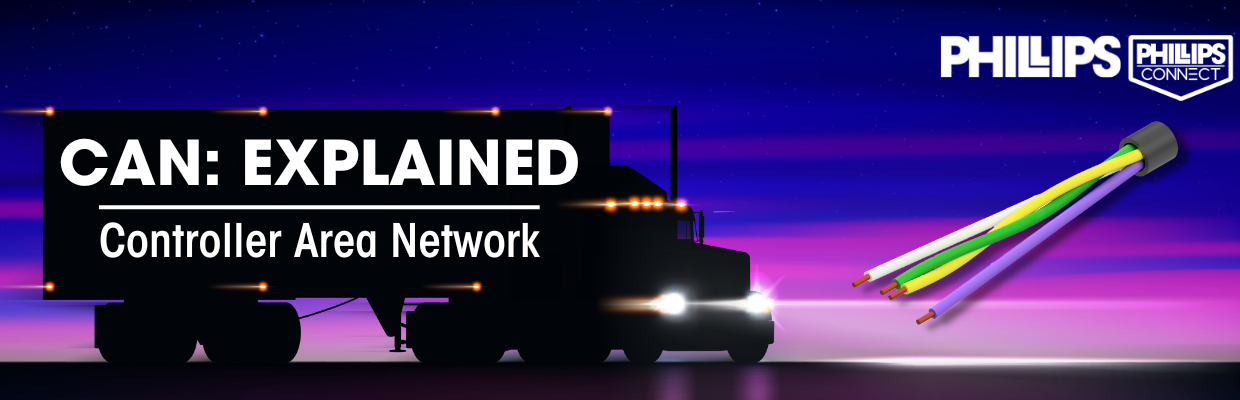
Today, most passenger vehicles consist of numerous controllers that communicate with one another through something called Controller Area Network (CAN). In most modern vehicles, when you press on the brake pedal, the pedal position sensor data is transmitted through CAN to allow many controllers to make decisions at the same time. This not only applies the brakes, but also illuminates the brake lights, locks the seat belts, monitors individual wheel speeds in anticipation of a traction control or an anti-lock braking event, and much more. The same reaction also happens when you turn on your windshield wipers. This simple input from the driver is propagated via CAN to many different modules to not only start the wipers, but also inform them of the anticipated load on the vehicle electrical system, presence of water on the road, or even a maintenance notification indicating it’s time to replace your wipers.
CAN takes hundreds of individual wires and whittles it down to two, known as a “twisted pair.” This pair creates a communication platform that runs the entire length of the vehicle, allowing each module to send and receive messages to and from all the other modules in the vehicle. It’s not only more efficient from a copper usage standpoint, but it also allows for significantly more information to be shared between modules, adding safety, efficiency, comfort, and other features to exist at a much lower cost.
European tractors and trailers have communicated with one another via CAN for more than a decade now. From this, fleets have experienced shorter stopping distances, enhanced driver situational awareness, an increase in safety, and a more complete driver experience due to the data that’s communicated throughout the entire vehicle. CAN has proven itself in this market as a viable and effective communication link between tractor and trailer.
Adoption of CAN in the North American trailer market has been slow because there simply wasn’t a whole lot you can do with it up to this point. The vast majority of trailers in North America only have a single ABS controller, with the wheel-speed sensors directly wired to it. There’s no need for a communication BUS if there’s only one thing capable of talking. Furthermore, the J560 (7-pin) connector that connects the tractor to the trailer doesn’t allow for CAN communication to cross from trailer to tractor.
With autonomous trucking on the horizon, CAN integration in North America is the next step in providing the autonomous truck the information it needs about its trailer – and in the time that it needs it. As CEO of Phillips Industries and Phillips Connect, Rob Phillips famously says, “If you’ve got an autonomous truck going down the highway with a fireball behind it and there’s no driver, that’s a problem.” That’s why tractor-trailer communication is critical, and a key element in future-proofing your fleet.
Phillips Connect and Phillips Industries, while working hand-in-hand with their integration partners, are utilizing CAN in trailers to create the same efficiencies for North American trailer owners that European trailer owners have taken advantage of for decades.
What are the next steps in integrating CAN with my fleet?
Choose the right gateway, like the Phillips Connect Smart7™ or StealthNet™. The Smart7 is compatible with sensors via CAN, collecting billions of actionable data points and streaming them through the Connect1™ user interface for fleet owners to analyze, track, and manage their most valuable assets. Upgrading your sensors to devices like CargoVision™ interior cargo camera is also beneficial, providing fleets with a volumetric view of every load and even indicating whether it’s safe to open the cargo doors. CAN will work at its peak if the technology is up-to-date, so enhancing your trucks with the latest technology is the first step to a more efficient fleet.
Visit https://www.phillips-connect.com/our-products to learn more today.
Solar Power That Pays Off: Why CargoVision Is a Smarter Way to See Inside Your Trailers
CargoVision delivers solar-powered trailer visibility with high-resolution interior views, volumetric data, and seamless TMS integration.
Read More
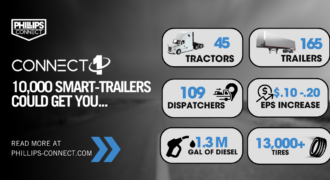
Phillips Connect Smart-Trailer Technology: Fleet Optimization that Means Something
At Phillips Connect, we know that the transportation industry is more competitive than ever. Fleet owners are constantly seeking ways to improve efficiency, reduce operational costs, and increase your ROI, and it is our goal to provide meaningful, actionable insights to help their bottom line. Phillips Connect offers Smart-Trailer solutions that translate into real savings for fleet optimization. Our solutions harness cutting-edge technology that has been gaining traction and delivering impressive results.
Read More
Preventing CSA Violations with Smart Trailer Technology
Phillips Connect is transforming how fleets manage compliance, focusing on critical areas like brakes, lights, and tires.
Read More
The International Roadcheck is a high-visibility, high-volume 72-hour inspection and enforcement event that takes place this week, May 16-18. CVSA-certified inspectors in Canada, Mexico, and the U.S. will conduct inspections of commercial motor vehicles and drivers at weigh/inspection stations, designated inspection areas, and along roadways
Read More
How Smart Trailers Are Making Trucking More Efficient
Telematics. A word that you see trending on the Internet. A word that you know carries significance. A word that you “should” know… but maybe you don’t. And that’s because the term telematics isn’t so simple.
Read More
Detention Is a Trailer Problem, Not Just a Driver Problem
Eliminate costly trailer detention with real-time visibility from Phillips Connect. Optimize planning, prevent delays, and bill detention.
Read More