As the transportation industry bridges the gap to autonomous, smart trailers are making trucking more efficient, safer and more advanced than ever before.
There was a time when trailer telematics felt like a nice-to-have. A forward-thinking feature for fleets that wanted to be ahead of the curve. That time is over.
Today, smart trailer technology is a baseline requirement for fleets that want to stay competitive, profitable, and compliant. It’s not about bells and whistles – it’s about visibility, safety, uptime, and the ability to make fast, informed decisions across every part of your operation.
Here’s why trailer telematics is now a must-have.
If you don’t have visibility into your trailer fleet – its location, condition, load status, and availability – you’re not just flying blind. You’re falling behind.
Smart trailer systems give you real-time insight into where your assets are, how they’re being used, and what needs attention. Whether it’s knowing if a trailer is empty and ready for dispatch, identifying a brake system fault before it causes downtime, or understanding why detention is dragging out, connected smart trailer data turns uncertainty into actionable insight.
And when that data is delivered automatically – through reliable sensors, cameras, and GPS – it empowers your team to act faster, smarter, and with far less guesswork.
Reactive maintenance is expensive. Unexpected breakdowns can sideline drivers, delay deliveries, and damage customer trust. Smart trailer technology helps fleets get ahead of mechanical issues, with automated fault code alerts for critical systems like ABS, tire pressure, lights, and more.
With the right platform, maintenance teams no longer need to dig through spreadsheets or rely on manual checks. They can see fault codes at a glance, prioritize repairs by severity, and schedule service before the issue escalates. This saves time, reduces costs, and keeps your trailers moving.
When trailers are connected, operations teams gain access to real-time and historical data that can inform smarter planning. It affects everything from route optimization to asset allocation. Instead of guessing where underutilized trailers are sitting idle or relying on outdated reports to schedule pickups, fleet managers can pinpoint bottlenecks, reduce empty miles, and adjust trailer positioning dynamically based on actual demand.
This kind of intelligence allows for tighter route planning, better coordination with shippers and receivers, and more efficient yard operations. Over time, the data from connected trailers can help identify patterns and inefficiencies that manual systems simply can’t, giving operations teams a critical edge in making every stop count.
Operations. Maintenance. Safety. Compliance. When trailers are connected, every department benefits.
Load sensors can verify whether cargo is present and properly distributed. Door sensors can alert you to theft risk or improper loading. Utilization metrics can show which assets are underperforming. All of this adds up to a fleet that runs leaner, safer, and with far less waste.
And if you’re still relying on gut instinct or manual paperwork to track trailer usage, availability, or health, you’re missing out on opportunities to increase revenue and reduce cost.
Trailer technology isn’t just about the trailer. It directly impacts driver satisfaction and safety.
Nothing kills morale faster than being sent out with equipment that fails on the road – or waiting hours at a drop yard because no one knows which trailer is ready. Telematics helps dispatchers and drivers align more effectively, avoid bad assignments, and stay focused on the job, not the hassle.
By catching safety issues before the trailer leaves the yard and streamlining trailer selection and handoff, smart trailer systems reduce friction for drivers—and help fleets stand out in a market where driver retention is more critical than ever.
Fleets that invest in smart trailer technology don’t just gain visibility. They gain leverage.
At Phillips Connect, we help fleets move faster with connected solutions that deliver real-time trailer intelligence – from fault codes to location, load status to door events. Our technology helps you turn every trailer into a fully visible, highly optimized asset that supports your people, your margins, and your reputation.
If you’re still thinking about trailer telematics as a future upgrade, here’s your wake-up call: the future is already here.
Smart trailers are making trucking more efficient. They’re no longer a luxury. They’re a necessity.
Don’t get stuck in the drop yard. Visit https://www.phillips-connect.com today to learn more.
A smart trailer is a semi-trailer fitted with sensors and an on-trailer gateway that collects and transmits real-time trailer telematics data including location, condition, and the status of things like trailer doors, cargo, TPMS, lights and brakes.
Smart trailers report: GPS/location and movement, cargo events (door open/close, CargoVision camera), trailer health (lights, brakes, tires), and power status (solar/battery metrics).
Yes, our customers think so. Industry case studies and Phillips Connect ROI data show savings from theft prevention and recovery, reduced roadside breakdowns (via pre-checks/diagnostics), and better utilization. Actual ROI will depend on fleet specifics; our SaaS platform, Connect1 includes ROI calculators to estimate impact.
Hardwired GPS trackers + sensors provide the strongest theft-resistance. Phillips Connect offers covert hard-wired trackers and battery/solar-powered solutions that keep transmitting when the trailer is disconnected from a trailer/cab. Paired with Phillips Connect door sensors and Connect1 alerts, you receive near-real-time notifications and a significantly increased chance of recovery.
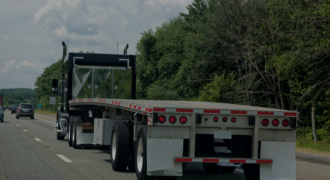
Flatbed Visibility Matters: Why Location, Brakes and Tire Health Belong in the Same Conversation
Beyond simple tracking, real-time insight into brake and tire health is essential to turn idle flatbed trailers into safe, efficient, and profitable assets.
Read More

The Future of Tire Management: Leveraging Data for Smarter Fleet Operations
The article "Information Inflation" in Fleet Maintenance Magazine explores how data analytics transform tire management for fleets.
Read More
TechAssist: Raising the Bar for Smart Trailer Installations and Maintenance
Phillips Connect’s TechAssist app helps OEMs and fleets streamline smart trailer installs, diagnose issues, and maximize uptime.
Read More
Detention Is a Trailer Problem, Not Just a Driver Problem
Eliminate costly trailer detention with real-time visibility from Phillips Connect. Optimize planning, prevent delays, and bill detention.
Read More
The 1%: Understanding Trailer Utilization
It’s safe to say that ROI is a crucial factor in any educated business decision - especially in transportation. Fleets want to know that their investments are worth the financial commitment. But what they don’t know is that the “seemingly smart” investment of a new trailer might in fact cost them money.
Read More
Moving the Industry Toward Autonomous
When I was growing up, the “future” was thought to be a technologically advanced paradise. It was often dreamt up in movies like Back to the Future with flying cars that could transport you through space and time. It seemed nearly impossible - and at least a few hundred years away. But the future is here. And it’s not slowing down.
Read More