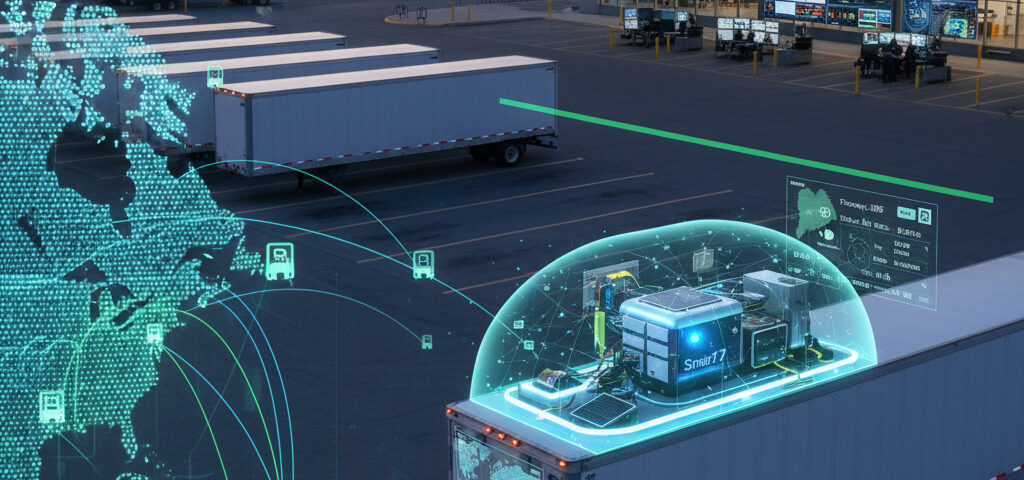
If a third of your trailers vanished from view today, where would the losses show up first: stolen assets, detention fees, or missed turns in the yard? The bigger the network, the easier it is for trailers to drift into “unknown” status. GPS trailer tracking for fleets puts every unit back on the map with live location, dwell metrics, and asset health so operations teams can act in minutes, not days.
Theft and unauthorized use decrease when you can accurately track a trailer and receive alerts as soon as it moves. Issues like detention and under-utilization are minimized when you can identify idle time and redeploy parked resources. Maintenance also moves from a reactive to a planned approach when you gather real data on mileage, brakes, tires, and doors instead of relying on estimates.
Enhancing security leads to faster recoveries and fewer unauthorized activities. Yard operations improve by reassigning idle assets and reducing dwell time. Predictive alerts decrease unplanned downtime by identifying issues before they affect drivers. Accurate status updates and ETAs help streamline communication between dispatch, drivers, and customers.
1. Hardware durability and power life for untethered duty cycles.
2. Clear, actionable software that converts data into alerts, dashboards, and plans.
3. Scalability and integrations so trailer data can integrate with the rest of your technology stack.
For fleets in Irvine, CA, and throughout North America, Phillips Connect provides the hardware, software, and support needed to integrate tractors and trailers. Our Smart7™ nosebox, SolarNet™, AssetTrac™, and Connect1 platform make GPS trailer tracking a seamless part of daily operations rather than just another dashboard tool. Explore how we help teams turn visibility into reliable capacity and lower risk with GPS trailer tracking for fleets.
What is GPS trailer tracking, and why do fleets need it?
GPS trailer tracking utilizes devices and software to monitor each trailer’s location, movement, and status. This technology helps fleets reduce theft, minimize detention time, and avoid under-utilization, while also enhancing visibility and providing accurate estimates for customer arrival times (ETAs).
How does GPS trailer tracking reduce detention fees and dwell time?
By monitoring arrival and departure times, as well as idle periods through geofencing, GPS trailer tracking identifies when trailers remain inactive for too long. This allows for timely reassignments and adjustments, ultimately reducing detention fees and dwell time.
How do geofencing alerts improve trailer theft prevention and unauthorized use control?
Geofencing alerts immediately notify teams when a trailer exits a designated area or moves outside of approved hours. This enables a prompt response to unauthorized movements, resulting in fewer incidents of theft and quicker recovery times, supported by the location history provided by GPS trailer tracking.
What trailer sensors can integrate with GPS trailer tracking platforms?
Modern GPS trailer tracking platforms can integrate various trailer sensors, including Tire Pressure Monitoring Systems (TPMS), Anti-lock Braking System (ABS) codes, door status indicators, temperature sensors, and wheel-end heat monitors. This integration consolidates health and utilization data, aiding in effective maintenance and dispatch decisions.
Phillips Connect TrailerID Turns Trailer Pairing into an Operational Advantage
TrailerID from Phillips Connect automates trailer identification at hookup, eliminating manual driver input and improving compliance, security, dispatch, and planning.
Read More
The 1%: Understanding Trailer Utilization
It’s safe to say that ROI is a crucial factor in any educated business decision - especially in transportation. Fleets want to know that their investments are worth the financial commitment. But what they don’t know is that the “seemingly smart” investment of a new trailer might in fact cost them money.
Read More
How many of you have made a purchase you later regretted, only to realize it was “final sale?” Maybe the shoe didn’t fit. But instead of getting your money back to buy ones that do, you’re stuck with a pair that’s a half-size too small and a blister on your heel as a constant reminder.
Read More
Today, most passenger vehicles consist of numerous controllers that communicate with one another through something called Controller Area Network (CAN). In most modern vehicles, when you press on the brake pedal, the pedal position sensor data is transmitted through CAN to allow many controllers to make decisions at the same time.
Read More
Preventing CSA Violations with Smart Trailer Technology
Phillips Connect is transforming how fleets manage compliance, focusing on critical areas like brakes, lights, and tires.
Read More
Safeguard Your Trailer Loads with Phillips Connect SmartLock™ Gladhands
Phillips Connect features SmartLock™ Gladhands,...
Read More