



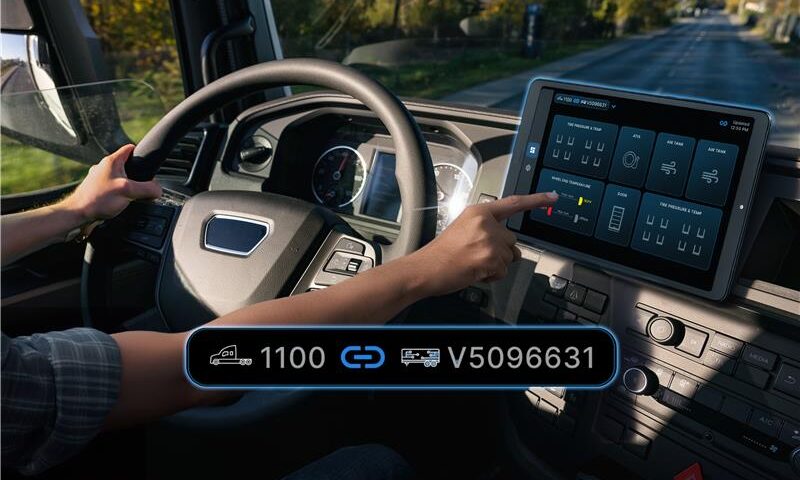
TrailerID removes manual steps for truck drivers while extending automated trailer identification across dispatch, planning, compliance, security and billing
What you need to know
- Phillips Connect TrailerID automatically confirms which trailer is connected, removing manual trailer selection from daily driver tasks
- Accurate trailer identification supports compliance, job execution, load security, and billing without adding steps for drivers
- TrailerID combines tightly integrated hardware and software to deliver dependable trailer identification fleets can rely on
IRVINE, Calif. and LAS VEGAS – Feb. 10, 2026 – Every day, trucks pick up and drop off trailers as freight moves through yards, terminals, and customer locations. Truck drivers are often asked to confirm which trailer they are pulling, usually by selecting it on a screen before moving on. When that step is rushed, skipped, or entered incorrectly, the consequences extend far beyond the cab. The wrong information can affect safety records, inspections, dispatch decisions, load security, and even when a company can bill for the work. That seems like a small moment at hookup can quickly create costly problems across an entire fleet.
Phillips Connect TrailerID addresses that problem by identifying the connected trailer at the moment it is hooked. Instead of relying on manual input, Trailer ID confirms the trailer connection automatically and shares that information across the systems fleets already use. The result is a simpler experience for drivers and more reliable information for the teams responsible for keeping freight moving.
“Accurate trailer identification affects nearly every part of a fleet’s operation,” said Mark Wallin, General Manager and Senior Vice President of Product at Phillips Connect. “With TrailerID, logs stay cleaner, jobs line up with what actually happened, trailers are easier to account for, and billing is easier to start and reconcile. TrailerID removes guesswork and gives fleet teams a shared view of what’s really happening with their trailers.”
For fleets, that same automatic trailer identification carries through to compliance activities like Hours-of-Service logging and trailer inspections. When the correct trailer is already reflected in the system, logs and inspection records stay accurate without relying on manual entry, reducing errors, rework, and the risk of compliance issues while keeping the driver experience simple.
TrailerID also helps fleets make sure that the trailer that was planned for a job is the one that actually left the yard. When the system confirms which trailer moved, teams can quickly spot mismatches, prevent mispulls, and understand which trailers are available or sitting idle. Dispatch and planning no longer have to guess or chase down updates to know what happened.
The same clarity carries through to security and billing. Knowing exactly when and where a trailer was dropped helps protect the load and reduce the risk of theft or fraud. It also allows billing to start based on a verified event, instead of waiting on manual confirmation or follow-up.
TrailerID is built on a vertically integrated hardware and software platform that delivers more dependable results than methods based solely on GPS or proximity. Trailer connections are detected through the physical tractor-trailer connection using the T/T Pair connector and then validated through Phillips Connect software. Drivers experience this automatically in the cab through DriverAssist, while operations teams see the same events through Connect1 in the back office. The result is a clear record of what actually happened rather than an estimate or assumption.
For drivers, TrailerID removes one more manual step from an already complex in-cab experience. Trailer identification happens automatically, reducing screens, selections, and the chance for error. That same pairing information is immediately available to dispatch, safety, operations, and billing teams.
TrailerID is available through multiple in-cab environments. Fleets can access TrailerID on the DriverAssist app directly through Phillips Connect or via integrations with leading in-cab platforms, including Platform Science and Geotab’s OrderNow Marketplace.
About Phillips Connect
Phillips Connect smart trailer technologies help the world’s largest fleets improve operations, safety and efficiency. The Phillips Connect platform of software sensors, cameras and telematics gateway innovations provide fleet managers and operational leads with real-time visibility into their trailers’ location, tire, brakes, cargo and door statuses, and more, saving customers time and money. Headquartered in Irvine, California, Phillips Connect is part of the Phillips family of companies, celebrating nearly a century of delivering innovative, reliable solutions that keep the transportation industry moving. For more information, visit www.phillips-connect.com.
What is Phillips Connect TrailerID?
Phillips Connect TrailerID is a solution that automatically identifies which trailer is connected to a truck at the moment of hookup, removing the need for drivers to manually select or confirm a trailer.
How does TrailerID work?
TrailerID detects the physical connection between the tractor and trailer and confirms that event through tightly integrated hardware and software, creating a verified record of trailer movement that fleets can trust.
What problem does TrailerID solve for fleets?
TrailerID eliminates errors caused by manual trailer selection, helping fleets avoid incorrect records that can affect compliance, dispatch decisions, load security, and billing.
How does TrailerID benefit drivers?
TrailerID removes one more manual task from the driver’s day by automatically identifying the trailer, reducing screens, selections, and opportunities for error in the cab.
How does TrailerID support fleet operations beyond the cab?
Verified trailer identification data from TrailerID is shared across dispatch, planning, compliance, security, and billing systems, helping teams understand what actually happened and act on accurate information.
How does TrailerID help with compliance?
By ensuring the correct trailer is automatically associated with Hours-of-Service logs and trailer inspection records, TrailerID helps keep compliance records accurate without adding extra steps for drivers.
How does TrailerID support job confirmation and planning?
TrailerID confirms which trailer actually moved, helping fleets align planned activity with real-world outcomes and maintain a clearer view of trailer availability.
How does TrailerID improve security and reduce risk?
Knowing exactly when and where a trailer was connected or dropped helps fleets protect loads, reduce theft or fraud, and investigate unexpected trailer movement.
How does TrailerID support billing?
TrailerID allows billing to begin based on verified trailer drop events rather than manual confirmation, reducing delays and reconciliation issues.
How is TrailerID different from GPS- or proximity-based trailer identification?
TrailerID relies on detecting the physical tractor-trailer connection rather than estimating proximity, making it more dependable than methods based solely on location or Bluetooth signals.
What is the relationship between TrailerID and T/T Pair?
TrailerID is the evolution of the T/T Pair capability, expanding automated trailer pairing into a software-led solution that supports multiple operational use cases across the fleet.
Where can fleets use TrailerID?
TrailerID works across multiple in-cab environments, including Phillips Connect DriverAssist and integrations with leading platforms such as Geotab and Platform Science.