By Frank Schneider
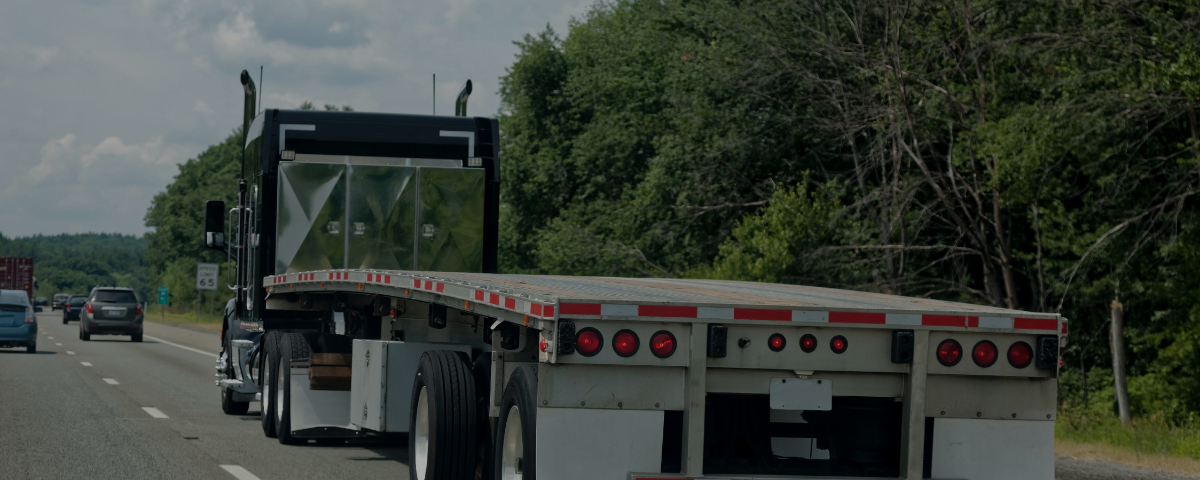
Flatbed trailers play a critical role in freight movement. From construction materials and machinery to steel, lumber, and oversized loads, flatbeds support freight that dry vans simply cannot handle, yet flatbeds are often managed with far less visibility than dry vans, even though they operate in more demanding and less predictable environments.
Knowing where your flatbed trailers are is essential, and knowing whether they are ready to be deployed is just as important. Location, brake health, and tire condition all determine whether a flatbed can be dispatched safely and efficiently.
Why Flatbed Trailers are Harder to Manage
Flatbed trailers are typically operated outside the structured trailer pool models common with dry vans. They are frequently staged at job sites, ports, rail yards, or customer locations as part of loading, unloading, or project-based workflows. These trailers may remain stationary for extended periods, be repositioned locally, or transition between assignments without returning to a centralized yard.
During these idle or low-visibility periods, mechanical issues can develop without immediate awareness from operations or maintenance teams.
Common challenges include:
Without real-time insight into both location and health, fleets are forced to rely on assumptions that introduce delays, inefficiencies, and added cost.
How Large Flatbed Fleets Reduce Search Time and Improve Readiness
For fleets that manage large numbers of flatbed trailers, visibility across yards, customer sites, and staging areas is one of the biggest operational challenges. Flatbeds are often spread across expansive properties or remote locations, making manual searches inefficient and inconsistent.
Ocean Trailer, which operates one of the largest full-service trailer fleets in Western Canada, faced this challenge as its rental fleet grew. With yards spanning dozens of acres and thousands of trailers cycling through rental, lease, and maintenance states, locating specific units became increasingly difficult using traditional processes alone.
By implementing connected trailer visibility solutions from Phillips Connect, Ocean Trailer gained the ability to pinpoint trailer locations within large yards and across distributed sites, down to specific rows or sections. This reduced the time spent searching for equipment and improved turnaround speed when trailers were returned, reassigned, or prepared for the next customer.
For flatbed operations, where trailers are frequently staged outside traditional dock environments, this level of location accuracy is especially valuable.
That same visibility becomes even more valuable when paired with insight into brakes and tires, helping teams understand not just where a flatbed is, but whether it’s ready to move.
Why Brake and Tire Data Matters More for Flatbeds
Flatbed trailers often experience harsher duty cycles than dry vans. Heavier loads, uneven weight distribution, exposure to weather, and long periods of sitting can all accelerate wear on brakes and tires.
Many brake issues and tire pressure develop while a trailer is parked. Without monitoring, those problems surface late, either during dispatch preparation or after a roadside event.
Brake and TPMS data help fleets:
For flatbeds that may sit for days or weeks between moves, this data closes a critical readiness gap.
Turning Flatbeds into Ready Assets Instead of Question Marks
When location data is combined with brake and tire health, flatbeds stop being unknown quantities. Operations teams can see which trailers are available, where they are, and whether they are mechanically fit for service.
This supports:
Supporting Utilization Across Mixed Fleets
Many fleets operate both dry vans and flatbeds. Without consistent visibility into both location and health, flatbeds often lag in utilization simply because their readiness is harder to assess.
Brake and TPMS data provide an objective way to evaluate readiness across all trailer types. Over time, this insight helps fleets plan maintenance more effectively, balance equipment usage, and make better capital decisions.
The Bottom Line: Flatbed Visibility Must Go Beyond Location
Knowing where flatbed trailers are is foundational. Knowing whether they can safely move freight is what makes that visibility operationally useful.
Location, brake health and tire condition together give fleets a clearer picture of readiness, risk, and utilization. For flatbeds that operate in open environments and demanding conditions, this combined visibility is no longer optional.
Flatbeds deserve the same level of insight fleets already expect from dry vans, if not more.
How is your fleet assessing flatbed readiness today, and where could better visibility into brakes and tires reduce delays or downtime?
Why is flatbed trailer visibility more complex than dry vans?
Flatbed trailers often operate outside structured trailer pool environments. They are staged at job sites, ports, rail yards, and customer locations and may sit idle between assignments. This makes it harder to know both where a flatbed is and whether it is mechanically ready without real time visibility.
Why is knowing flatbed trailer location not enough?
Location alone does not indicate readiness. Brake and tire conditions can change while a flatbed is stationary. Without insight into brake health and tire pressure, fleets may assume a trailer is available only to discover issues during dispatch preparation or pre trip inspection.
How do brake alerts help flatbed operations?
Brake alerts identify ABS faults and other brake issues while a trailer is idle or between assignments. This allows maintenance teams to address problems during planned downtime rather than reacting to issues at dispatch or after a roadside event.
Why is TPMS especially important for flatbed trailers?
Flatbeds often carry heavier or uneven loads and may sit for extended periods. Slow tire leaks can develop without detection. TPMS data helps fleets identify pressure loss early and prevent tire damage, delayed dispatches, or unplanned downtime.
What changes when flatbed location and health data are combined?
When fleets can see where flatbeds are staged and whether brakes and tires are in acceptable condition, they can assess readiness before assigning a driver. This leads to faster dispatch decisions, fewer aborted pickups, improved maintenance planning, and safer equipment entering service.
The 1%: Understanding Trailer Utilization
It’s safe to say that ROI is a crucial factor in any educated business decision - especially in transportation. Fleets want to know that their investments are worth the financial commitment. But what they don’t know is that the “seemingly smart” investment of a new trailer might in fact cost them money.
Read More

Today, most passenger vehicles consist of numerous controllers that communicate with one another through something called Controller Area Network (CAN). In most modern vehicles, when you press on the brake pedal, the pedal position sensor data is transmitted through CAN to allow many controllers to make decisions at the same time.
Read More
How GPS Trailer Tracking Transforms Hidden Fleet Assets Into Measurable Profit Gains
If a third of your trailers vanished from view today,...
Read More
Transform Cargo Monitoring and Safety: Phillips Connect’s CargoVision Camera
Phillips Connect has unveiled its next generation of CargoVision, with a wide-angle view that captures the full interior of the trailer.
Read More
Preventing CSA Violations with Smart Trailer Technology
Phillips Connect is transforming how fleets manage compliance, focusing on critical areas like brakes, lights, and tires.
Read More
“We wanted to provide better service, but there just wasn’t time….” No one has ever said that to a customer (hopefully). In the services sector, it’s usually not too little time that causes a poor experience, but an inefficient use of time.
Read More