By Mark Wallin
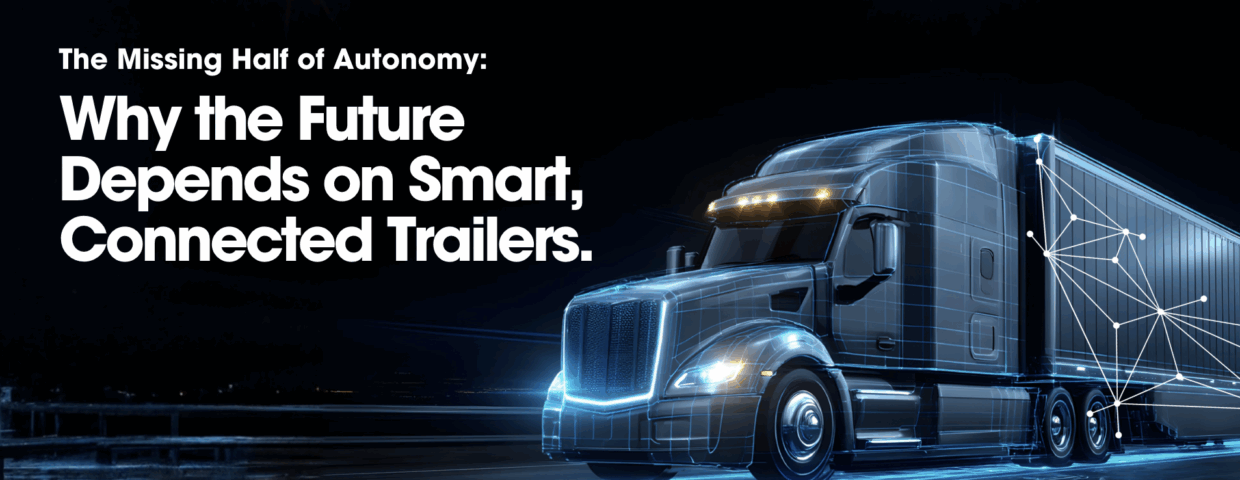
The conversation around autonomous trucking has focused almost entirely on the tractor, but the tractor only tells half the story. The trailer carries the cargo, and its smart sensors produce a crucial data set that connects directly to the rest of the vehicle and ideally, every member of the fleet operation.
Without that connection, there is no complete autonomy. You cannot have an autonomous tractor with a disconnected trailer. It all has to work together, or nothing works at all.
At Phillips Connect, we believe the path forward depends on turning on the lights inside the trailer. Fleets need to know where the trailer is, but also what’s happening in and around it in real time. Cargo movement, door activity, tire pressure, brake performance, and overall load status all have to be visible, intelligent and integrated into daily operations.
When the trailer becomes a smart, connected, active participant in a fleet’s decision-making process, it stops being a static piece of equipment and becomes an operational asset that drives efficiency, safety, and readiness, which is the foundation for autonomy.
For too long, the trailer has been treated as a silent partner in transportation. Phillips Connect’s platform changes that by collecting and organizing live sensor data across every trailer system, and giving fleets the ability to see, understand and act on what’s happening in real time.
That visibility becomes even more critical as the industry moves toward autonomy. Once a human ‘sensor’ is no longer sitting in the cab, fleets need another way to see, hear, and feel what’s happening with the trailer. Smart trailer technology is the only answer because it gives fleets the digital awareness to replace human intuition with precise information.
Trailer health is essential to that intelligence. Tires, brakes, and lights are the backbone of safety and compliance. A driver can see a smoking tire or feel vibration, but an autonomous system cannot, unless the trailer alerts the back office to an issue or a potentially dangerous situation. A smart, connected trailer continuously monitors tire pressure, temperature and wheel-end activity to detect early signs of failure, even before smoke appears or a flat tire develops. It tracks brake performance, verifies lights are working correctly, and alerts maintenance teams to potential problems before they cause downtime or violations.
This is what it means to make the trailer an active participant in operations. It’s no longer a piece of equipment waiting to be inspected or repaired. The trailer becomes a living source of intelligence and insights, constantly communicating its health and condition to the people and the systems that keep freight moving.
Cargo visibility adds another dimension. Fleets can see if a trailer is loaded, partially full or empty, and they can determine if it contains backhaul material or drayage, identify when and where loading or unloading takes place and optimize utilization across their entire operation. This level of insights eliminates guesswork, reduces idle time, and helps fleets keep equipment moving and profitable.
A smart, connected trailer doesn’t operate in isolation, but rather contributes its data to a unified ecosystem that also includes the tractor, driver, and back-office systems that plan and manage every stop and every load. When those data streams converge, fleets gain the context they need to run safely, predictably, profitably and efficiently.
Autonomy isn’t possible without awareness, and a self-driving tractor can’t make accurate or safe decisions if it doesn’t know what’s happening behind it. Smart trailer technology delivers the data and the confidence that autonomous systems depend on and creates a unified understanding of both tractor and trailer performance, turning raw information into a dynamic feedback loop that keeps operations moving smoothly.
I often say that autonomy is the end goal, not what powers it. What powers it is visibility. That visibility begins in the trailer, which remains the most data-rich and underutilized source of insight in the transportation ecosystem.
A recent contributed article in Fleet Equipment by our friend and former Global Fleet Systems Director at UPS, Lawrence Bader, explores how visibility will shape the next generation of autonomous freight. While Lawrence’s article doesn’t name specific technology providers, it clearly defines the need for connected systems that can see what is happening in the trailer, not just what’s around it.
Bader’s perspective, built from more than 30 years of leadership within one of the world’s largest and most advanced fleets, reinforces what Phillips Connect is helping the industry achieve. Autonomy depends on clarity, and clarity starts with the trailer. When every trailer becomes a smart, connected, data-driven participant in the operation, the path to autonomy becomes clear.
Autonomy will not arrive as a single product or upgrade. It will emerge from visibility, intelligence and complete collaboration between every component of the vehicle. The fleets that succeed in the future will be the ones that treat their trailers not as cargo containers, but as active contributors to every decision on the road.
When fleets can see the whole picture, from nose to rear door, they can operate safely, efficiently, and intelligently. Phillips Connect is lighting that path forward, one smart, connected trailer at a time.
We’ve all heard of the acronym “BLT”. But this time, I’m not referring to your favorite childhood sandwich. In the trucking world, BLT stands for brakes, lights, and tires. These three things are important safety components to any commercial vehicle, and when malfunctioning, could cause harm to your trailer, driver, or other vehicles on the road.
Read More
Flatbed Visibility Matters: Why Location, Brakes and Tire Health Belong in the Same Conversation
Beyond simple tracking, real-time insight into brake and tire health is essential to turn idle flatbed trailers into safe, efficient, and profitable assets.
Read More
When Cargo Vanishes: What the Guy Fieri tequila heist says about the new face of trailer security
The Santo Tequila heist exposed new tactics in cargo theft. Discover how multi-layered trailer security keeps fleets and assets protected.
Read More
How many of you have made a purchase you later regretted, only to realize it was “final sale?” Maybe the shoe didn’t fit. But instead of getting your money back to buy ones that do, you’re stuck with a pair that’s a half-size too small and a blister on your heel as a constant reminder.
Read More
“We wanted to provide better service, but there just wasn’t time….” No one has ever said that to a customer (hopefully). In the services sector, it’s usually not too little time that causes a poor experience, but an inefficient use of time.
Read More
The International Roadcheck is a high-visibility, high-volume 72-hour inspection and enforcement event that takes place this week, May 16-18. CVSA-certified inspectors in Canada, Mexico, and the U.S. will conduct inspections of commercial motor vehicles and drivers at weigh/inspection stations, designated inspection areas, and along roadways
Read More